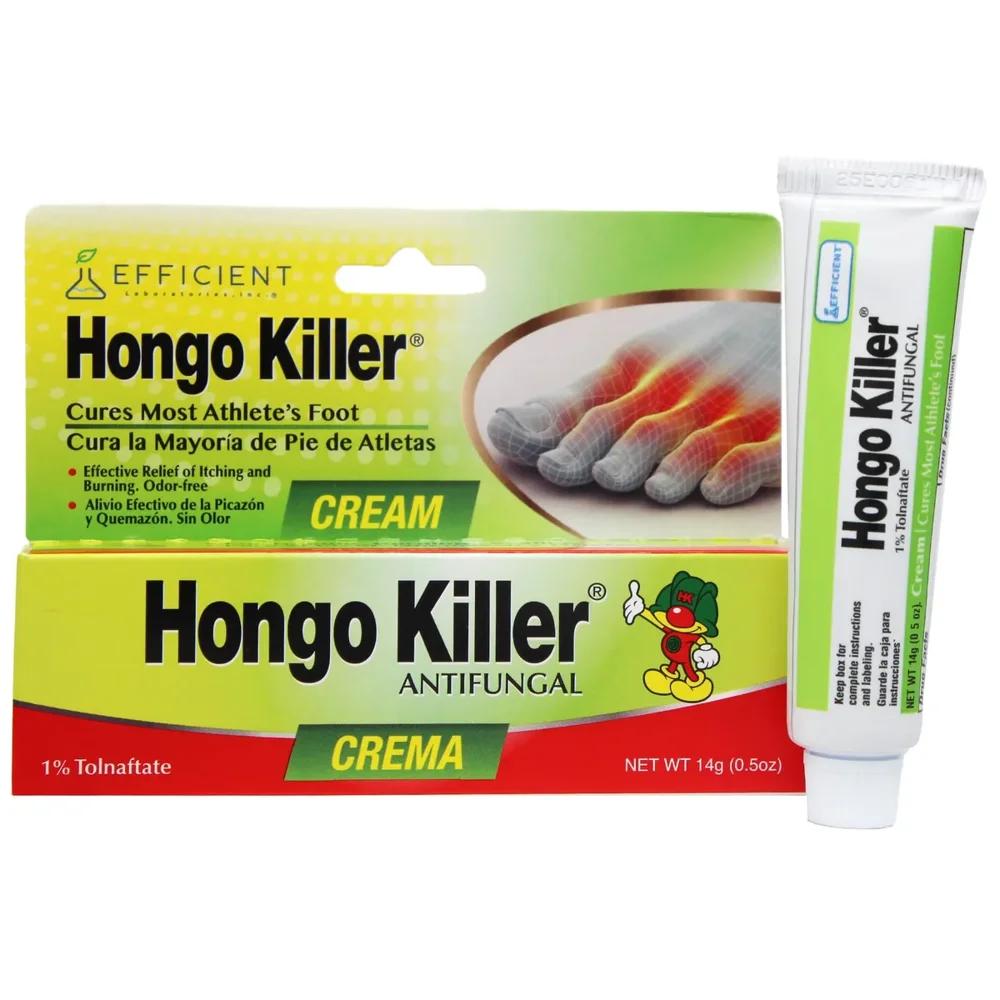
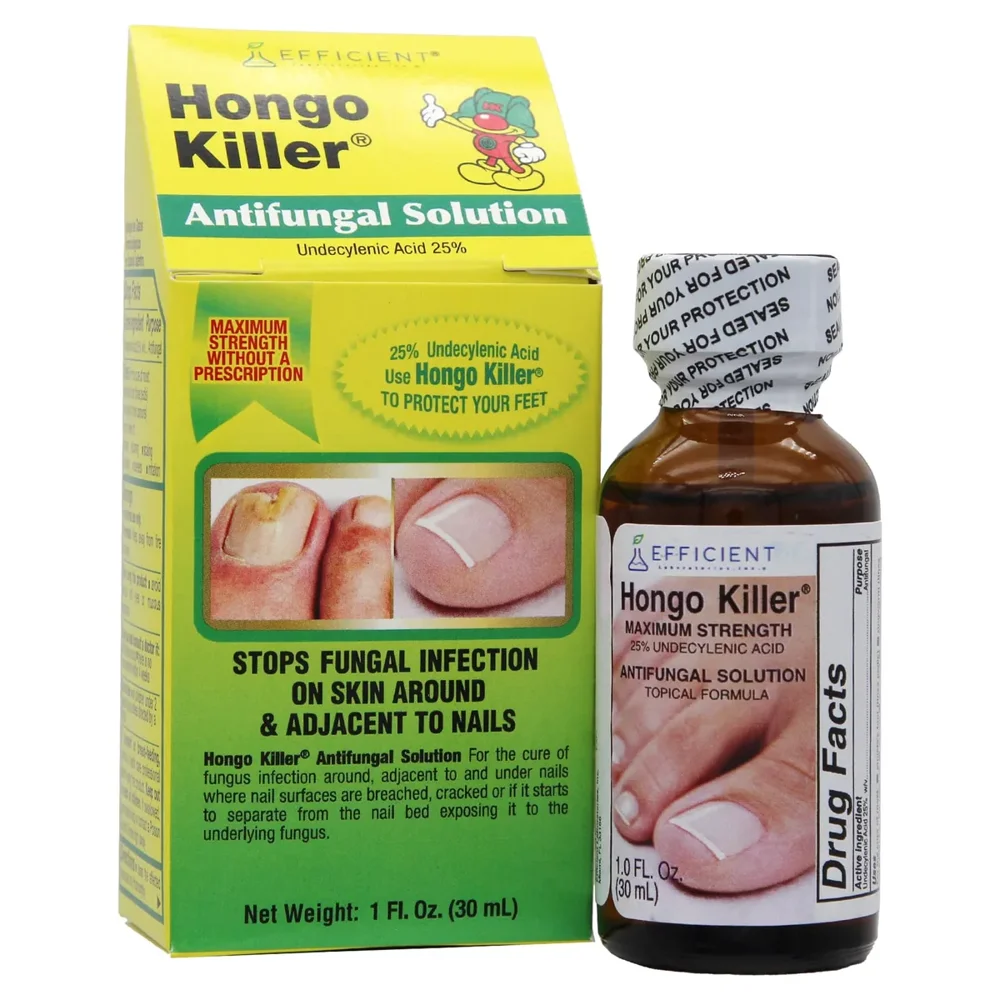
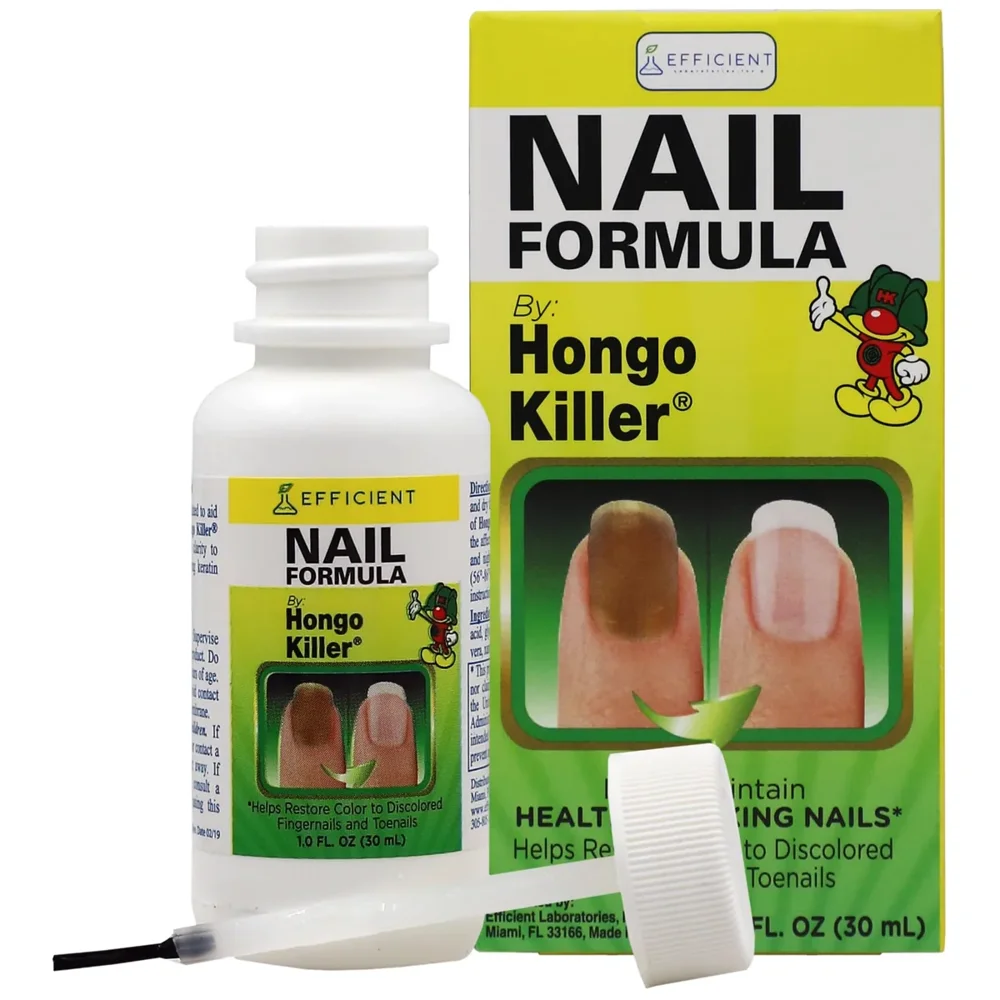
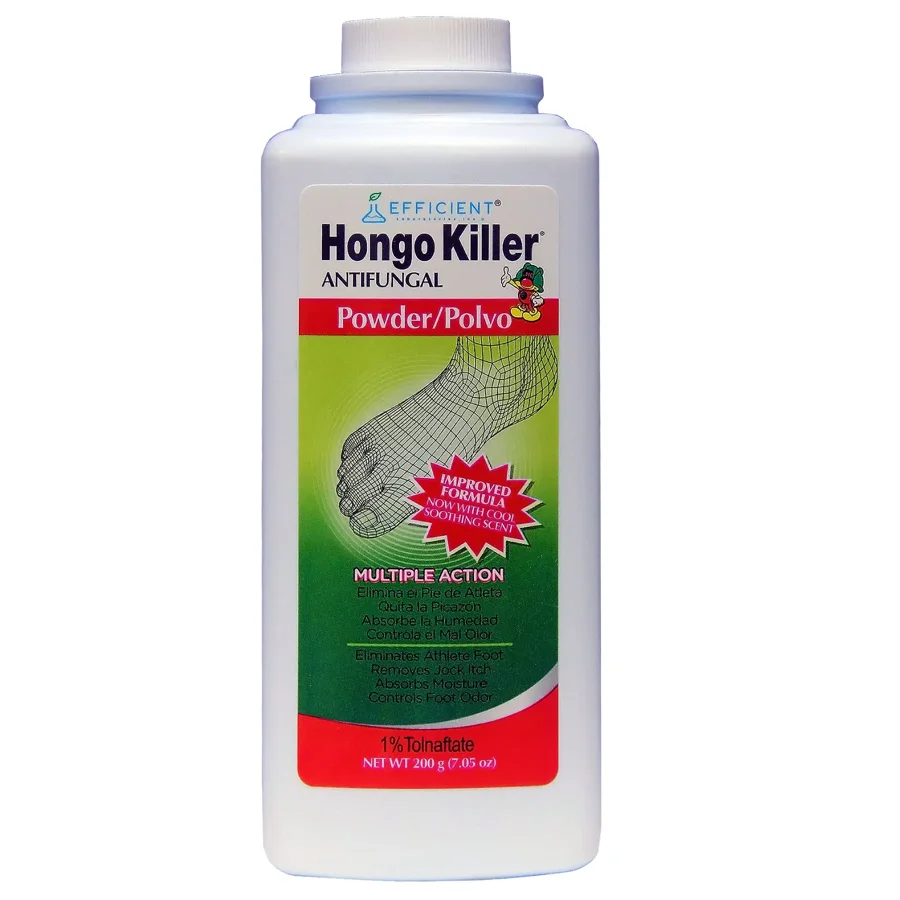
Two Hongo Killer products have a brush in the cap. One contains 25% undecylenic acid and carries Drug Facts for fungal infections of the skin. The other is a cosmetic for the appearance of a discolored nail. Buying whichever bottle happens to have the word “nail” nearest the photograph is a particularly poor way to choose between them. The brand and applicator are similar, but the intended uses differ.
Our recommendation is to match the exact labeled use first and the form you can apply comfortably second. For someone comparing dry sprays specifically, the Hongo Killer Spray Powder has a clear identity and a closely matched alternative in Tinactin. For someone seeking treatment for suspected nail fungus, we do not recommend Hongo Killer Nail Formula or assume the antifungal skin solution will treat the nail. CDC explains that treatment depends on the site of infection and recommends discussing suspected fungal nail changes with a healthcare provider. CDC on ringworm treatment
Eight shelf listings collapse into seven distinct choices
Efficient Laboratories markets a family of creams, powders, sprays and liquids under the Hongo Killer name. Two of the eight source listings are different sizes of a tolnaftate cream. This leaves six distinct OTC medicine-and-form combinations and one cosmetic. Their active ingredients and delivery formats are printed on the product panels. Neither the largest number in the strength column nor the highest star average can decide which labeled use applies to someone with a skin concern.
| Distinct product | Form and size reviewed | Active ingredient or role |
|---|---|---|
| Antifungal Powder | Shake-on powder, 7.05 oz | Tolnaftate 1% |
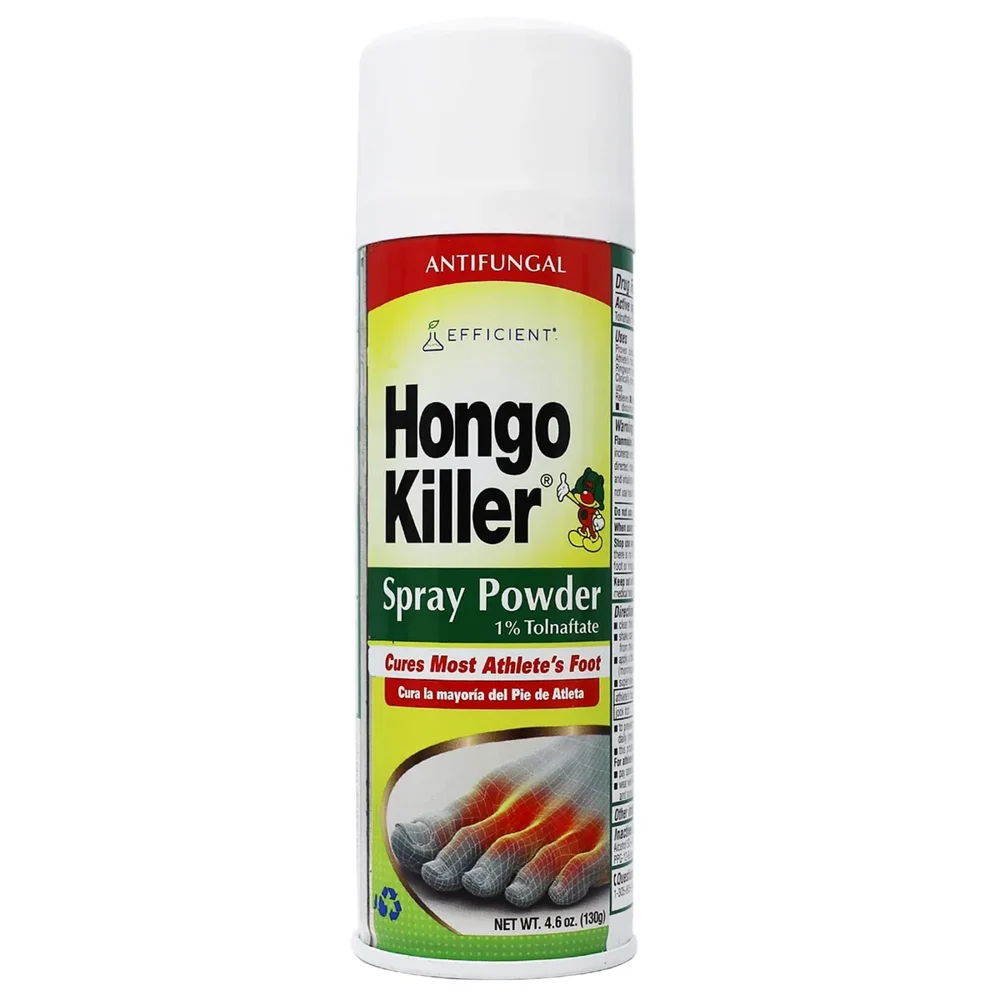
| Spray Powder | Aerosol powder, 4.6 oz | Tolnaftate 1% |
| Antifungal Cream | Tubes of 0.5 or 1.0 oz | Tolnaftate 1% |
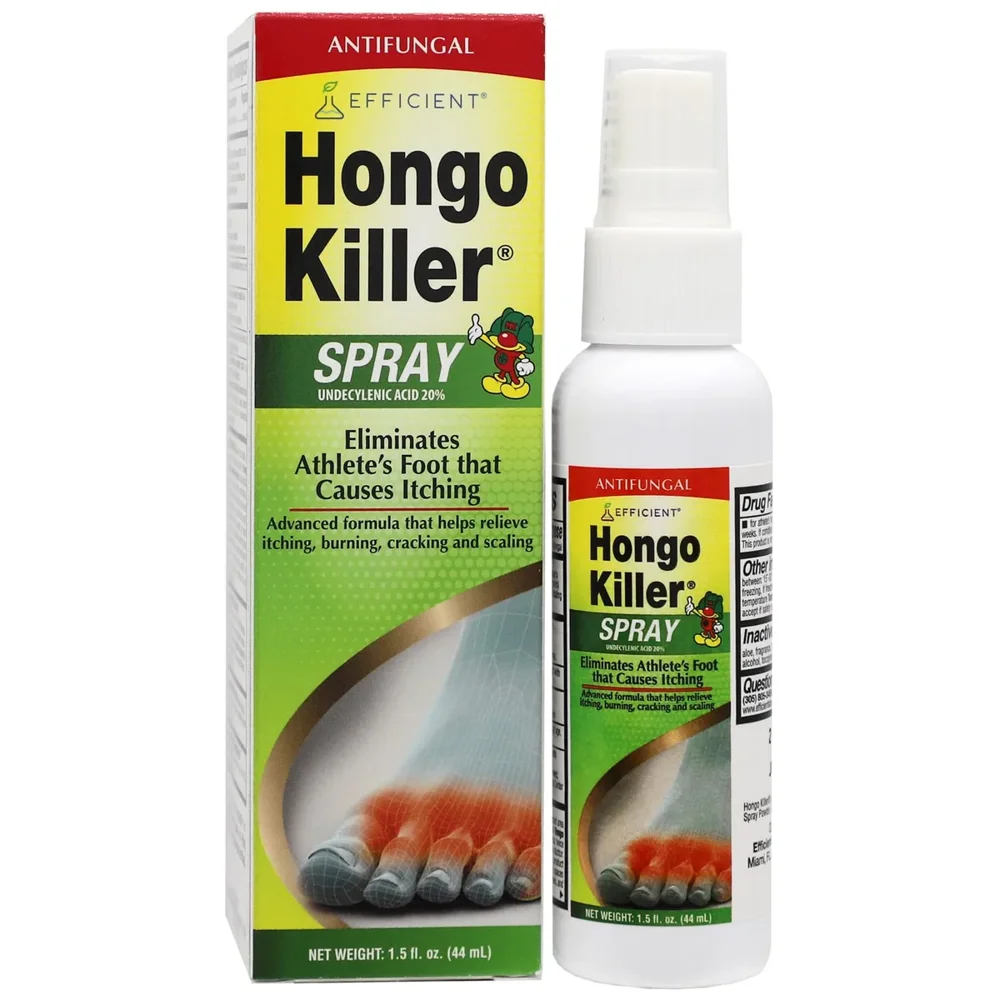
| Antifungal Spray | Pump spray, 1.5 fl oz | Undecylenic acid 20% |
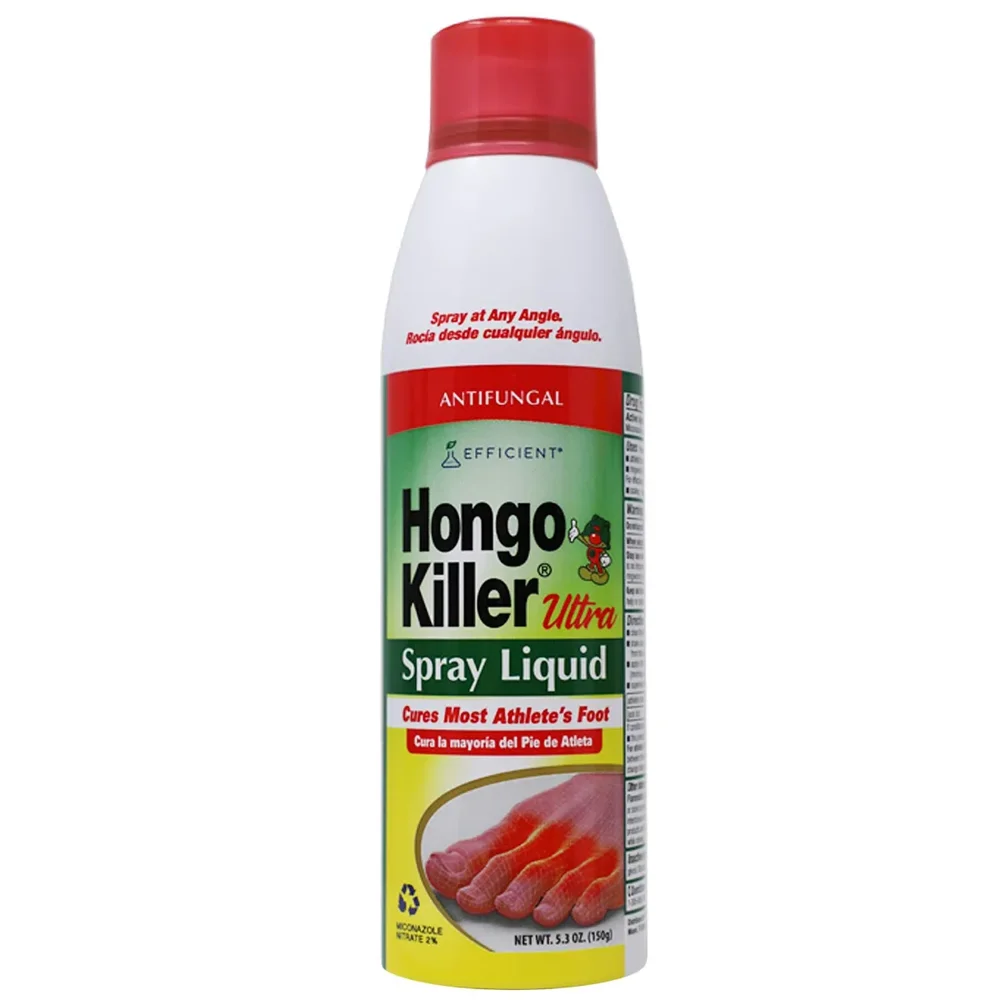
| Ultra Spray Liquid | Aerosol liquid, 5.3 oz net weight | Miconazole nitrate 2% |
| Antifungal Solution | Brush-on liquid, 1 fl oz | Undecylenic acid 25% |
| Nail Formula | Brush-on cosmetic, 1 fl oz | Cosmetic for nail appearance, no drug ingredient |
Three different products in this table can reasonably be described in conversation as “the spray.” There is the spray that deposits a powder, the smaller non-aerosol pump and the larger aerosol liquid. A request to a family member to buy the spray therefore leaves out both the ingredient and the form. A clear picture of the entire front panel, including the second line of the name and the pack size, is far more useful than a cropped picture showing only the brand logo.
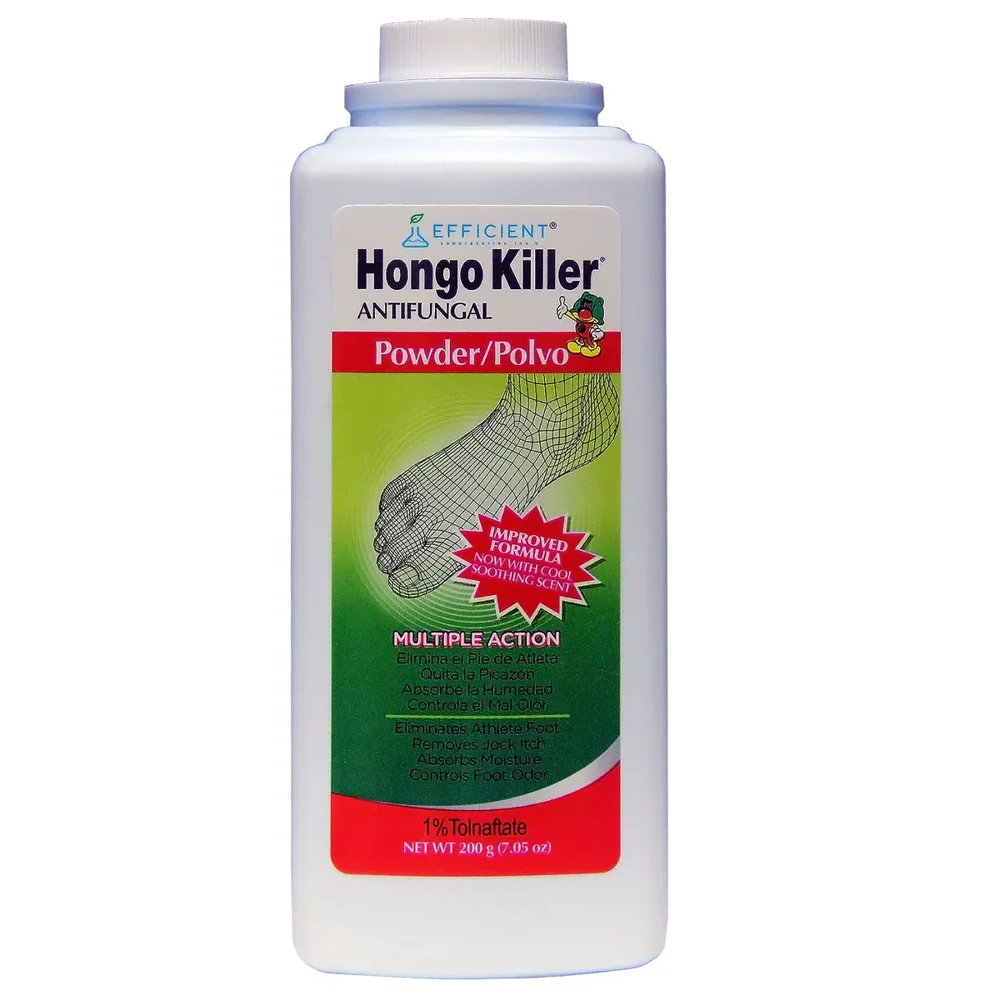
The two powders have the same active ingredient
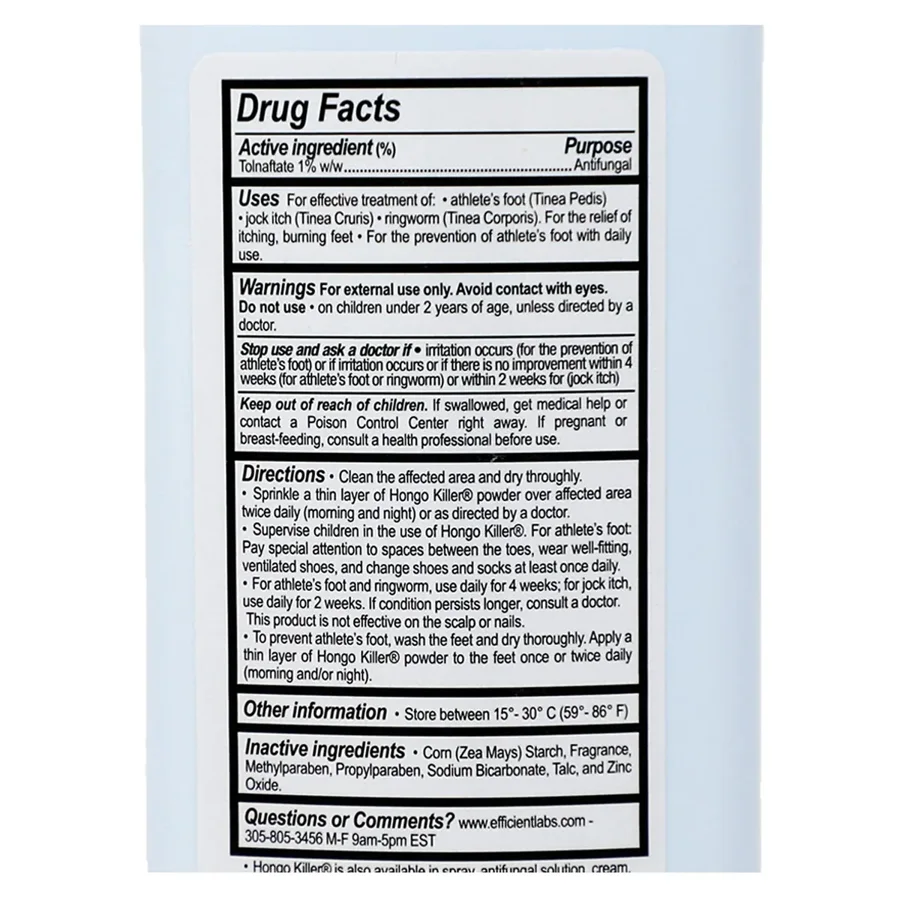
Antifungal Powder is the 7.05 oz shake-on product. Spray Powder is the 4.6 oz aerosol. Both list 1% tolnaftate. Someone who already knows they want this ingredient in powder form can narrow the question down to how they want to dispense it. A shaker and an aerosol present quite different handling and storage considerations even when the word powder and the active ingredient match. A large net weight does not tell you how much product each application dispenses.
A shaker does not require the aerosol can's delivery mechanism. It can, however, be awkward to control powder if the opening, angle or surrounding space is inconvenient. An aerosol offers a particular spray pattern and has its own package warnings. The relevant product's instructions should be read in full before use. Neither design establishes that one will deposit exactly the amount a buyer imagines or leave the same residue on every surface. The published photos show two different containers. They do not constitute a test of either spray coverage or mess.
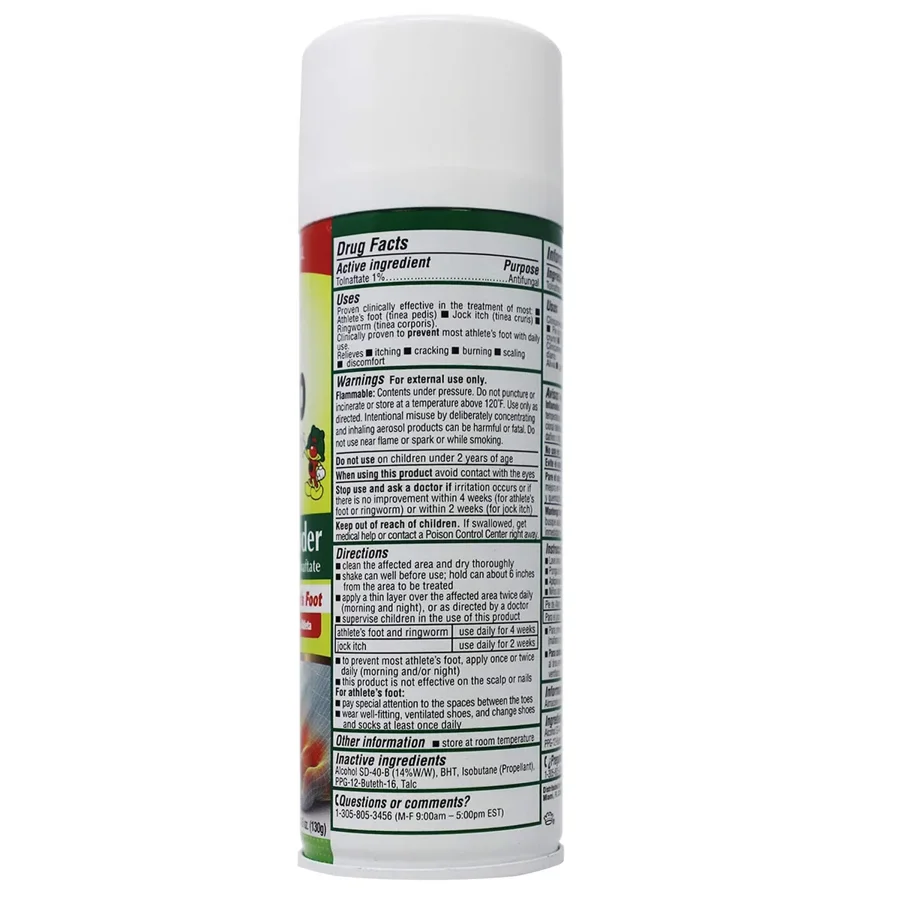
For the powder spray, the DailyMed panel specifically identifies tolnaftate at one percent and lists ingredients including starch and kaolin. This is useful for matching a refill to an earlier can. A buyer who only remembers the red and yellow packaging could easily end up with the aerosol liquid and a different active ingredient. Saving a photo of the Drug Facts line is an easy way to make the next purchase more precise. Hongo Killer powder spray label
The small pump and the tall aerosol
The 1.5 fl oz Antifungal Spray is a pump containing 20% undecylenic acid. The 5.3 oz Ultra Spray Liquid comes in an aerosol can and uses 2% miconazole nitrate. These are different ingredients, so twenty and two cannot be read as a tenfold comparison of how well the two products work. A concentration expresses how much of that particular active ingredient is present in that formulation. It does not turn different medicines into entries on a shared strength scale.
Units add another wrinkle. The pump is sold in fluid ounces, a measure of volume. The aerosol liquid is sold by net weight in ounces. Dividing both prices by the number on the front yields two different kinds of unit cost. You can calculate the price per fluid ounce for two bottles of the pump, or per net weight ounce for two cans of the same liquid aerosol. Comparing those results as if a fluid ounce of one product always weighs one ounce is unjustified.
The name Ultra might imply a superior or faster acting version to someone scanning a shelf, but neither a brand modifier nor the size of the can establishes that. The manufacturer's actual Drug Facts sheet for Ultra identifies miconazole nitrate 2%. The DailyMed entry for this particular can has a confusing title mentioning tolnaftate, while its active ingredient table identifies miconazole nitrate 2%. The manufacturer's own label artwork and Drug Facts PDF resolve the identity of the advertised 5.3 oz Ultra Spray Liquid. As always, the actual current can is the final check. Efficient Laboratories Ultra label · DailyMed active ingredient table
Two creams, one formulation to compare
The small Antifungal Cream and the tube called Cream Family Size list the same strength of tolnaftate. The source lists a half ounce and a full ounce. A larger tube may lower the price per ounce, but the word “family” does not establish that everyone in a household should use it or that a symptom in two different people has the same cause. The age restrictions, warnings and labeled uses on the specific tube still apply. The purchasing question is how much of the correct product is needed, not how large the household is.
A cream offers a more localized format than an aerosol. For someone choosing between labeled options for an accessible area, a tube allows the user to see the portion placed on a fingertip. The flip side is that the person has to be comfortable handling the product and reaching the intended skin. Someone with reduced mobility or difficulty reading small print may find it useful to discuss format with a pharmacist before purchase. A very small tube may be convenient in a bag yet harder to read than a larger carton.
A common comparison mistake is to place the half-ounce cream beside the 7.05-ounce powder and simply conclude that the latter has better value. They have the same active ingredient, but the way the product is spread, the container and the surrounding formulation differ. A price-per-ounce calculation can tell you which cream pack makes more financial sense when the product is the same. It cannot tell you how many satisfactory applications a consumer will get when comparing two different carriers. Hongo Killer product comparison
The brush-on solution and the cosmetic nail formula
The Antifungal Solution lists 25% undecylenic acid and is applied with a brush. Its package identifies uses on skin and includes the important sentence, “This product is not effective on the scalp or nails.” The applicator is convenient for placing liquid where the brush reaches. It does not change the body site covered by the label. The skin around a nail and the nail plate itself are different sites. A purchaser trying to address a change in the nail should read that sentence before deciding the solution is the item they need. Manufacturer's solution label
Nail Formula by Hongo Killer is the other brush-on bottle. Efficient Laboratories describes it in terms of the appearance of a damaged or discolored nail. The manufacturer does not identify an antifungal drug ingredient for this cosmetic. Someone interested only in appearance may consider it on those terms. A cosmetic cannot establish the cause of a color change, and a similar-looking nail can have more than one possible explanation. A report that a nail looked different after use would not establish that an underlying infection was treated. Efficient Laboratories Nail Formula
A practical safeguard for ordering either brush-on is to write the desired words in full before opening a shopping site. “Antifungal Solution, undecylenic acid 25%, 1 fl oz” is a much more precise search than “Hongo Killer for nails.” The cosmetic's product name and the manufacturer name should also be written out when that is the intended item. Check the carton when the order arrives, including the ingredients and instructions on the bottle. Online thumbnails occasionally give more prominence to the brand than the product name.
Suppose the carton you want to replace has disappeared, but the bottle is still in the cabinet. Turn it until the active ingredient and percentage appear together and photograph both. Then record the dispenser separately. A typed shopping note that says only “Hongo Killer spray” leaves open the powder aerosol, liquid aerosol and smaller spray formats. Those words describe different ways the contents leave the container. A photograph of the cap alone may help identify the package, but it cannot settle the ingredient question. If the remaining panel has rubbed off or the type is illegible, bring the container to the pharmacy and compare it with an intact label before choosing a replacement.
How the spray compares with Tinactin and Lotrimin
Tinactin Athlete's Foot Powder Spray provides the closest named comparison in format and active ingredient. The manufacturer lists tolnaftate 1% in a powder spray. Lotrimin AF Athlete's Foot Powder Spray also uses a powder spray format but lists miconazole nitrate 2%. That is the same named active ingredient and percentage seen in Hongo Killer Ultra Spray Liquid, delivered here in a powder spray rather than the Ultra liquid can. Anyone who remembers liking an ingredient or format can use this distinction to place the options correctly. Tinactin powder spray · Lotrimin AF powder spray
| Product | Ingredient on its own label | Dispensing form | Best direct comparison |
|---|---|---|---|
| Hongo Killer Spray Powder | Tolnaftate 1% | Aerosol powder | Tinactin powder spray by both form and ingredient |
| Tinactin Athlete's Foot Powder Spray | Tolnaftate 1% | Aerosol powder | Hongo Killer Spray Powder |
| Hongo Killer Ultra Spray Liquid | Miconazole nitrate 2% | Aerosol liquid | Other miconazole products for ingredient, liquid spray products for handling |
| Lotrimin AF Athlete's Foot Powder Spray | Miconazole nitrate 2% | Powder spray | Ultra for ingredient, Hongo Killer Spray Powder for dispensing format |
The comparator table shows why there is no single answer to “Which one is the equivalent?” An ingredient match is not necessarily a format match. A format match need not carry the same ingredient. Different inactive ingredients and instructions can remain even when both headline items match. A pharmacist can help if a clinician specified a particular medicine or if a prior reaction makes an ingredient especially important. The right comparison depends on why you want a replacement in the first place.
What the label can tell you about limits
Look for the Uses section of the particular Drug Facts panel. The range includes products labeled for athlete's foot and ringworm, and some also list jock itch. The exact list varies. A claim that appears on the powder or on the Ultra liquid should not be copied onto the cream simply because the cartons use similar graphics. The pack's directions also state how long to use the product and when to seek advice. Follow the instructions on the version in your hand or those provided by your clinician.
CDC notes that different conditions can have similar-looking skin or nail symptoms. That matters for a buyer who has tried several products and is still searching a drugstore aisle. Switching from shake-on to aerosol because it is easier to apply may be a meaningful format change. Trying one product after another to find out what a persistent or worsening problem is can delay appropriate assessment. For a suspected nail or scalp infection, a clinician can determine whether testing or treatment different from these skin products is needed. CDC overview
The sprays and solutions also have product-specific storage and flammability warnings. A convenient size for a gym bag does not eliminate those instructions. Read the actual panel before deciding where an aerosol or liquid will be kept. A buyer who needs to transport a product should check the requirements for that particular journey. An image of a portable bottle gives no assurance that every carrier or destination permits it. Someone comparing a cream and an aerosol may reasonably give ease of storage as much importance as ease of application.
Five buyers, five observations about the forms
SoleGrave reviewed the pump Antifungal Spray on May 30, 2026 and drew attention to the difference between the small pump and larger can. That distinction is supported by the ingredient labels. The review is useful because it describes the exact confusion a shopper might encounter on the shelf. Gary L. Phillips, reviewing the shake-on powder on November 15, 2025, liked the dry feeling and commented on value. That personal impression says more about a preference for powder than it does about how another formulation compares clinically.
Pickles reviewed the brush-on Antifungal Solution on July 14, 2017 and described a thinner liquid and a more alcohol-like smell than they remembered from an earlier purchase. It is an old account of a perceived difference, not proof that the current formulation has changed. Jannette wrote about Spray Powder on July 16, 2020 and described choosing it because they wore tennis shoes frequently. Angel Le reviewed the family-size cream on May 12, 2023 and mentioned long familiarity with it. The latter two accounts tell us why an application format remained in regular use for those individuals.
All five accounts were published in the source catalog's buyer-review archive with product names and dates. We did not independently establish the exact medical condition of any reviewer. An account of texture, smell, or convenient use can help a reader picture a product. A comment about results cannot establish a diagnosis, verify how closely instructions were followed or replace comparative evidence about medicines. Hongo Killer buyer accounts
Ratings and our verdict
The source catalog showed the largest rating count on Ultra Spray Liquid, with 4.4 out of five from 2,786 ratings. The 0.5 oz cream showed 4.5 from 1,229, while the 1 oz cream showed 4.3 from 204. The solution showed 4.3 from 471, shake-on powder 4.6 from 439, pump spray 4.4 from 399, spray powder 4.3 from 218 and cosmetic nail formula 4.4 from 80. These are listing snapshots observed on November 14, 2026. Amazon separately displayed 2K+ purchases in the preceding month on the Ultra Spray Liquid listing and 100+ on the shake-on powder listing on November 14, 2026. Each figure gives a lower bound for that listing. Exact unit sales remain undisclosed.
We recommend using the active ingredient, labeled body site and intended use to identify the eligible products, then comparing form and pack size. The 1% powder spray has a clear comparator in Tinactin. The two tube sizes are a straightforward quantity decision once the cream is the correct choice. The small pump and tall liquid aerosol are different medicines. We would pass on any purchase for which the only reasons are the word “Ultra,” a high star count or the color of a familiar box. For suspected nail fungus, the cosmetic Nail Formula and the skin-only solution should stay off that particular shopping list.