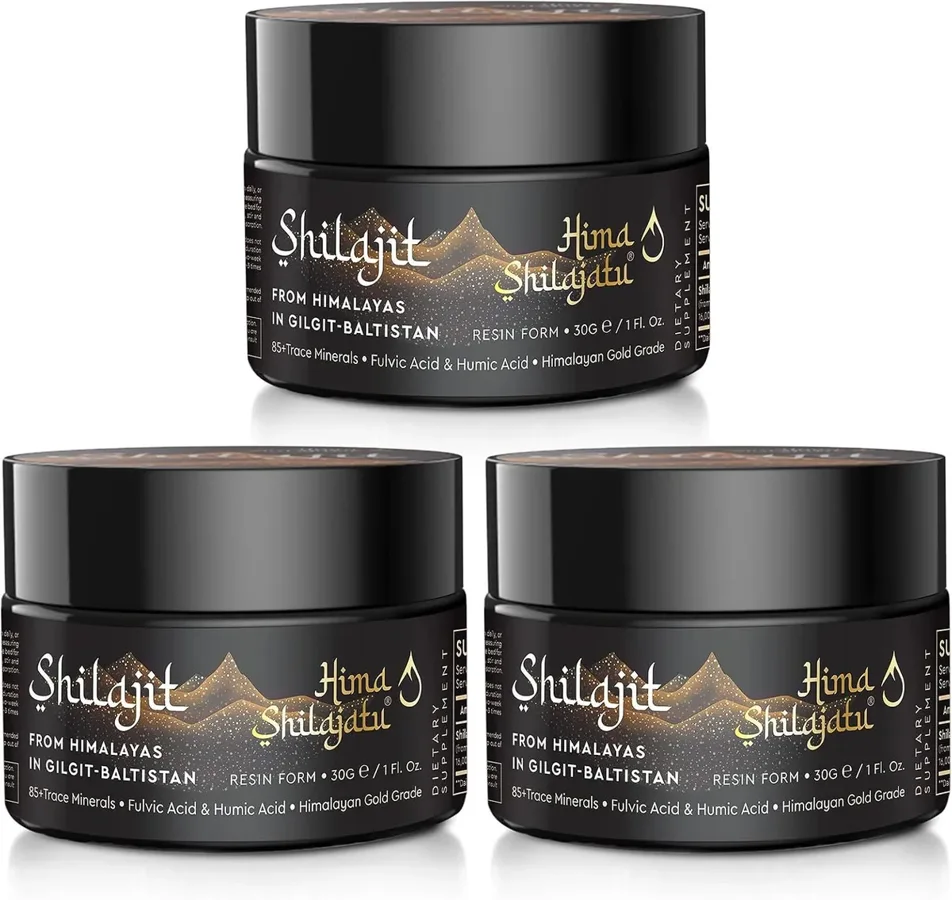
The most important number on the Hima Shilajatu shelf is one. There is one resin formulation, sold as one, two or three dark jars. Each jar holds 30 grams. None of the bundles adds a different strength, a different ingredient or independent evidence of purity. That makes this a less conventional product review: the three prices are easy to compare, while the question that matters most before buying an ingestible resin takes more work.
Our verdict is to hold off on a purchase unless the seller can supply credible testing for the lot you would receive. We could verify the label's serving arithmetic, the inclusion of measuring sticks, the brand's claimed origin and dated customer comments on taste and packaging. We could not verify independent, current testing tied to that lot. We also found no adequate basis to recommend this specific jar as a treatment for fatigue or as a reliable way to improve energy, concentration or physical performance. Hima Shilajatu resin listing · Operation Supplement Safety review of shilajit
What the product actually is
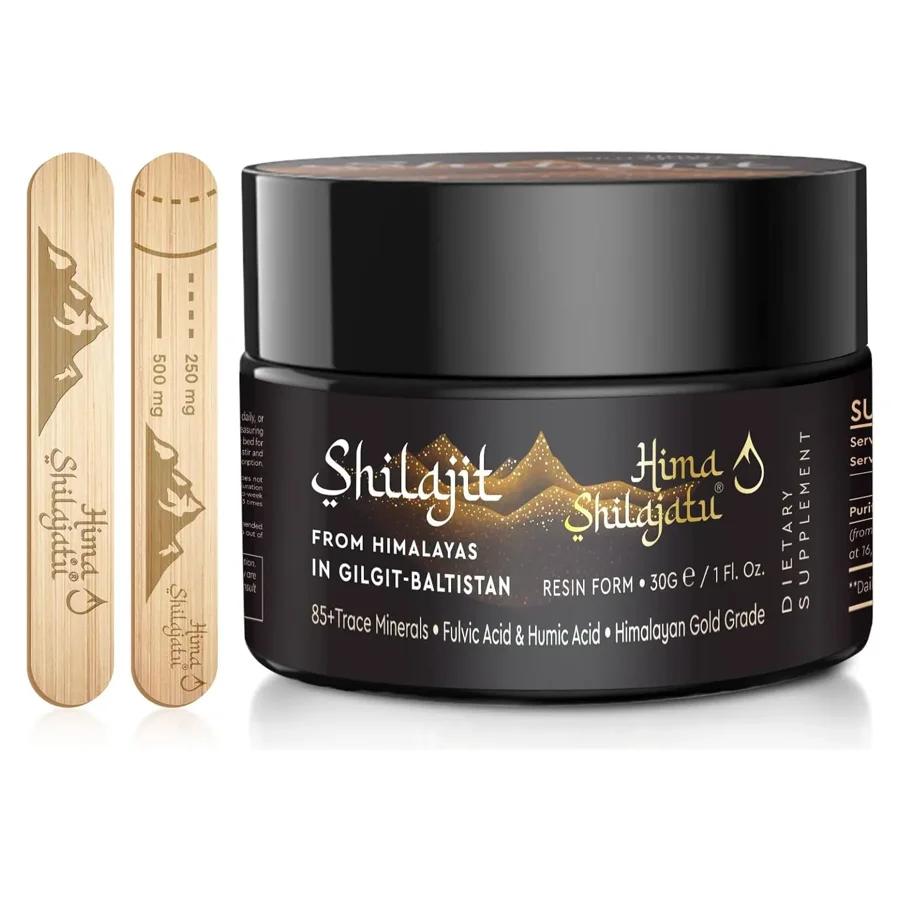
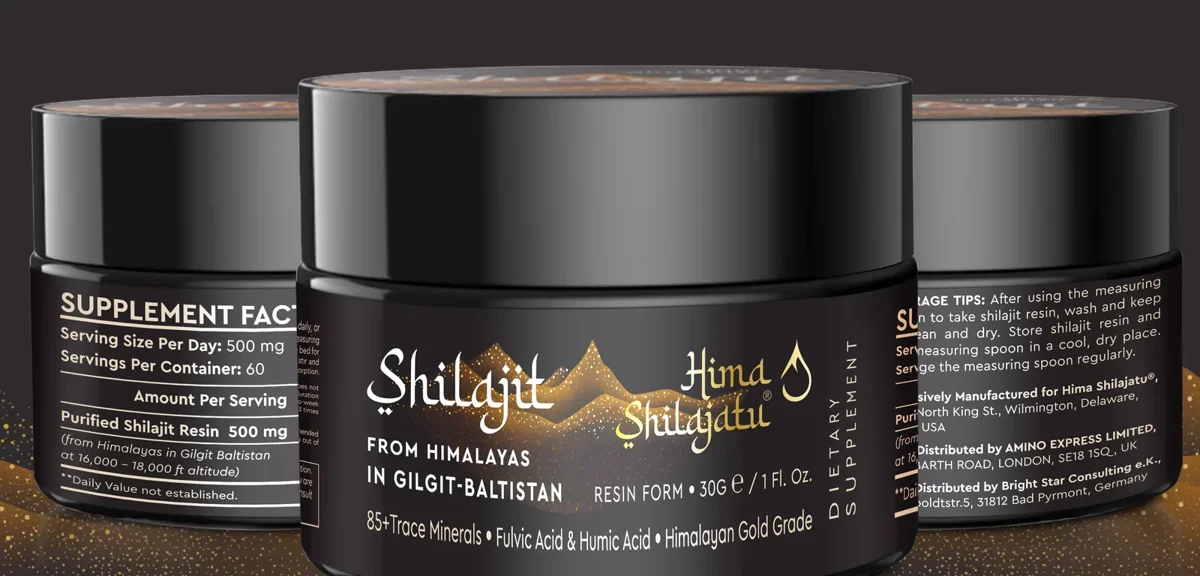
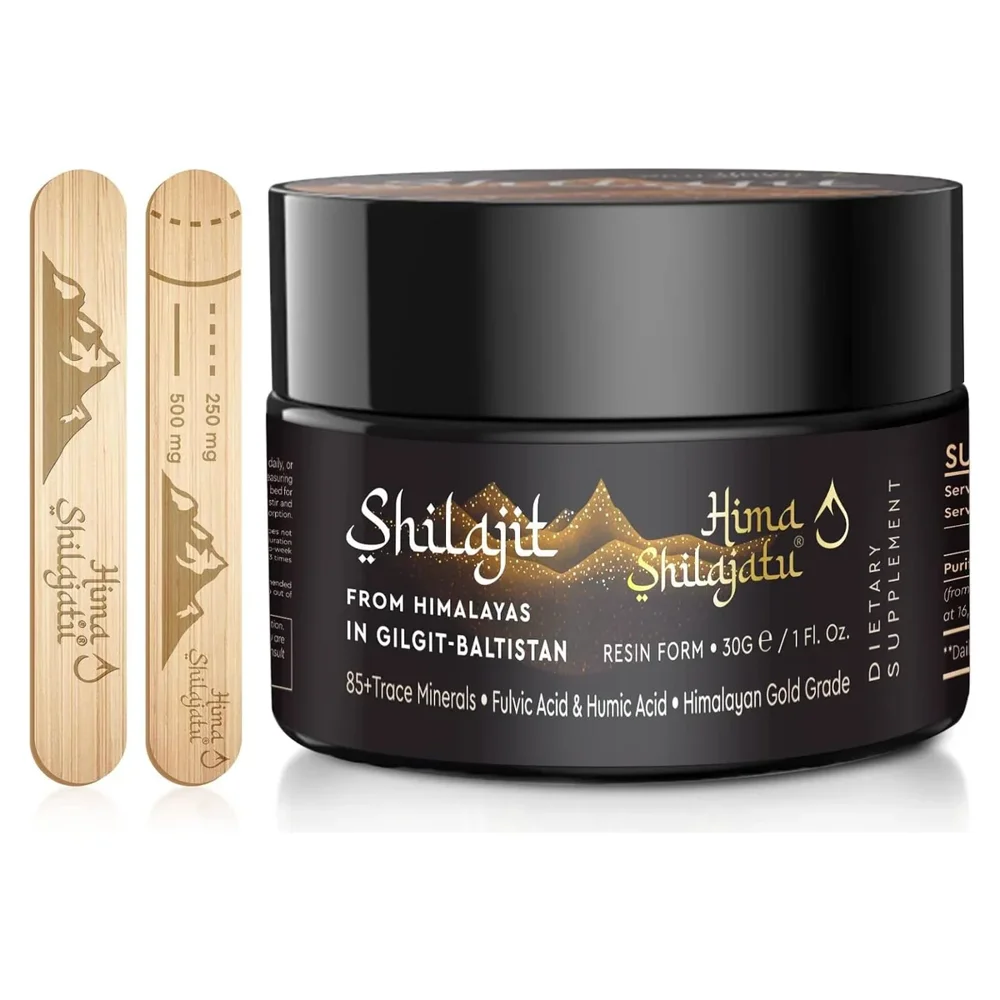
The jar's Supplement Facts describe purified shilajit resin from Gilgit-Baltistan. The shop reproduces a label serving of 500 mg, with sixty servings per container. The supplier's description places its source at high altitude in the Himalayan region. It presents the product as a single-ingredient resin, packaged with marked wooden sticks. Those are sufficiently precise details to identify the item on a crowded search page. The words “pure Himalayan shilajit” alone could describe a great many unrelated products. Label reproduced by the shop
It is worth distinguishing the brand name, Hima Shilajatu, from the wider category and the shop's domain name. A bottle of capsules sold by another company can legitimately say it contains Himalayan shilajit without belonging to this line. A piece of research on a purified, standardized extract can refer to the general ingredient without examining this jar. Even two labels that each say 500 milligrams could be describing different materials. Mass alone provides no measurement of identity, contamination or biological effect.
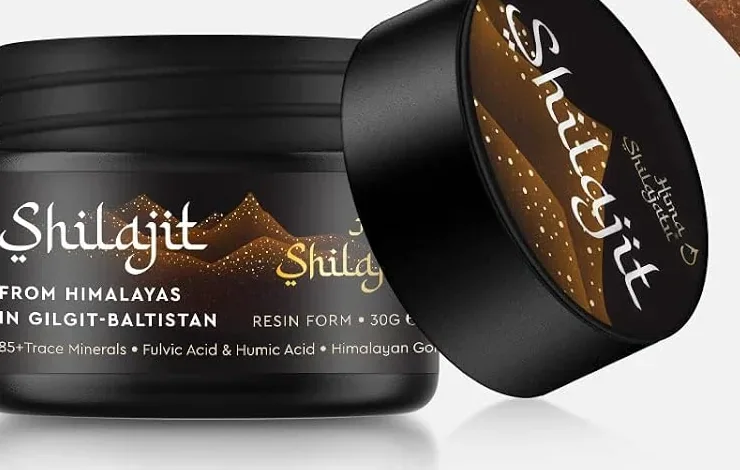
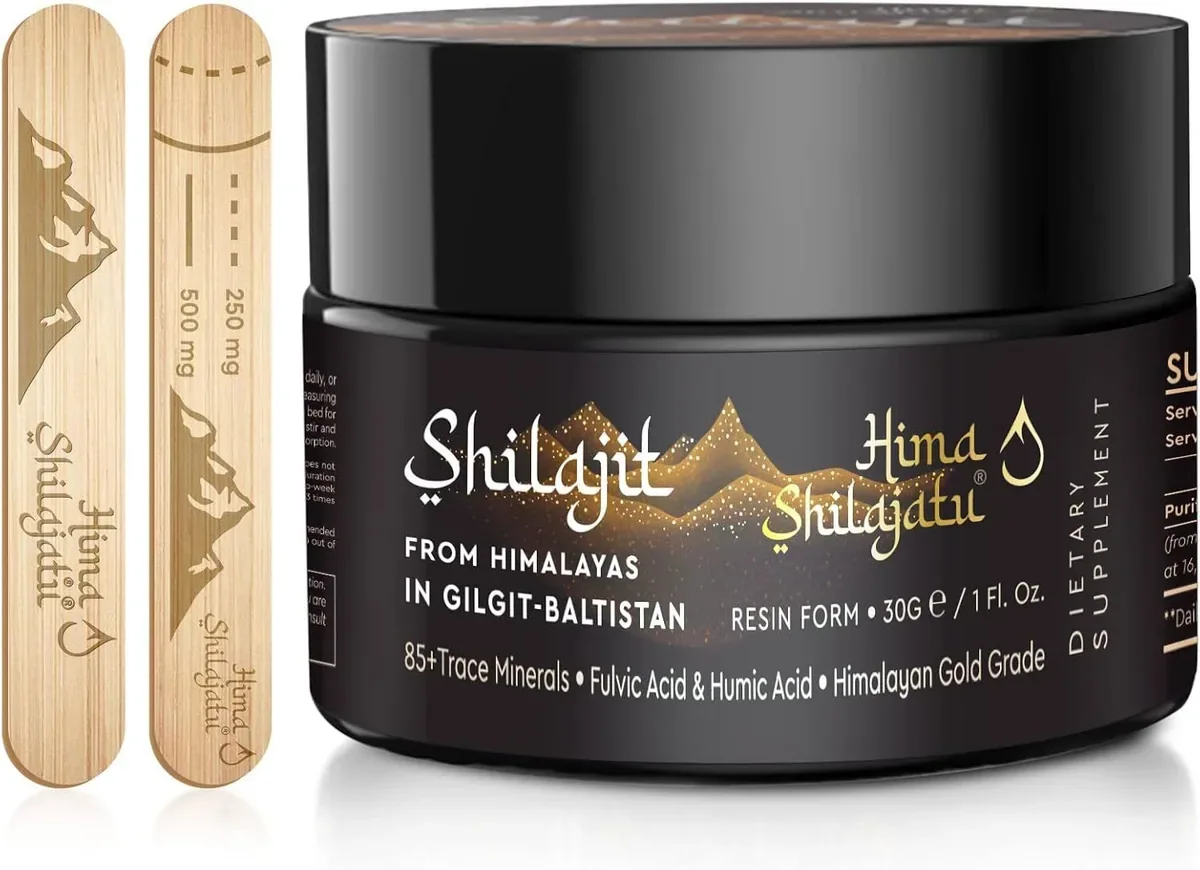
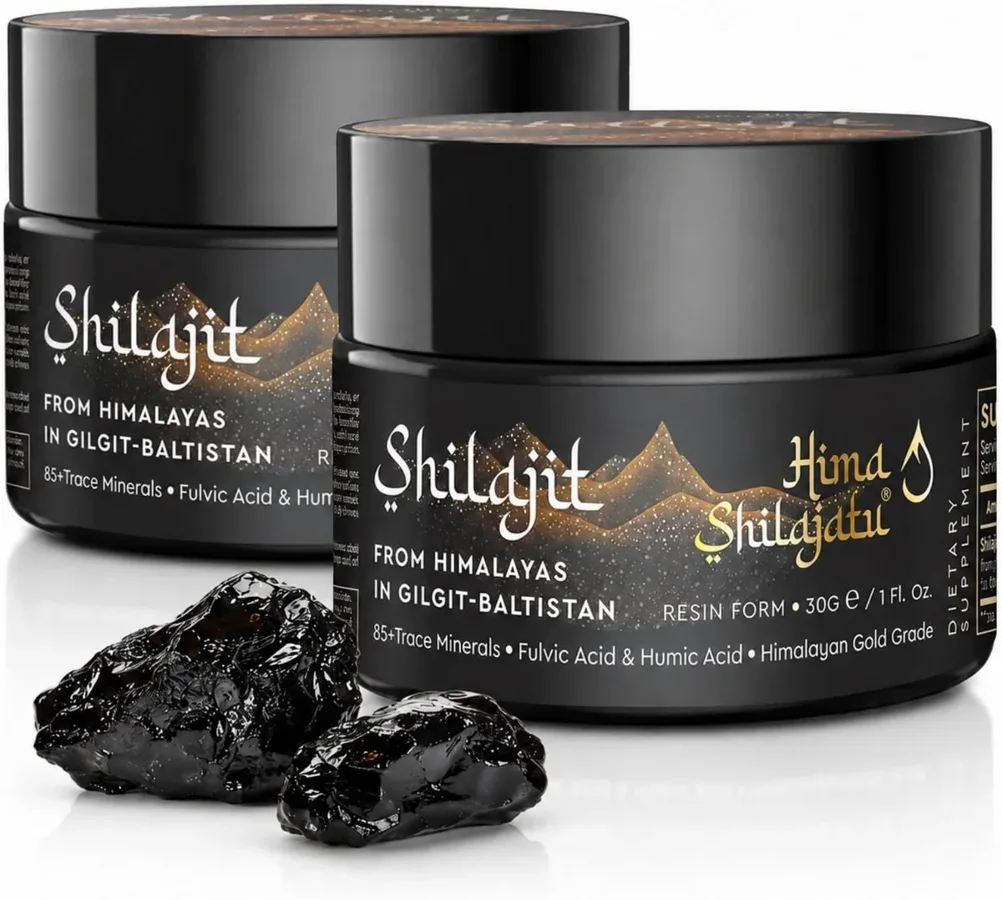
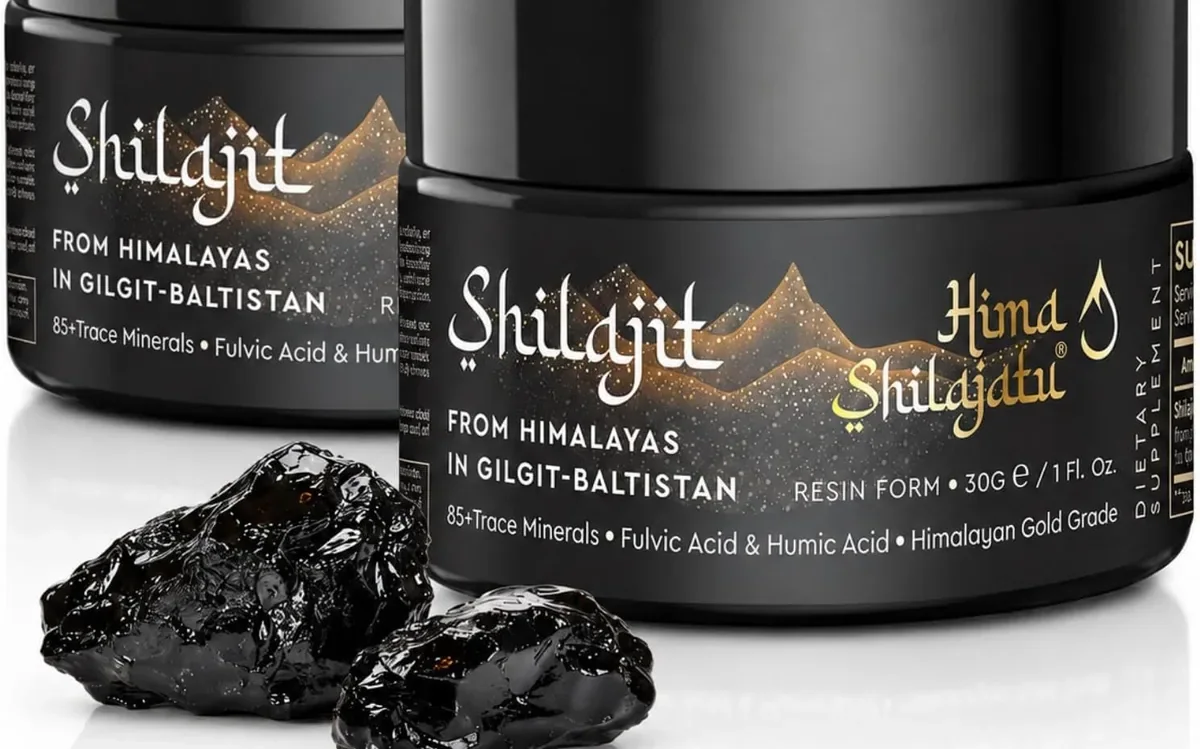
The jar photos are informative about the physical transaction. You can see the screw-top jar, the front label, the box and measuring implements in the source gallery. Those photographs would help someone notice an obvious wrong item arriving in the mail. They cannot tell the viewer whether the contents match the printed chemical description. A brown-black resin, a mountain panorama and a gold-colored emblem are especially poor substitutes for a laboratory result. Use the photos to identify the product, then ask a different source to answer the purity question. Shop gallery
The arithmetic on three pack sizes
| Purchase option | Resin supplied | Labeled servings | What actually changes |
|---|---|---|---|
| One jar | 30 g | 60 | Lowest amount committed to one product |
| Two jars | 60 g total | 120 | Two sealed 30 g jars |
| Three jars | 90 g total | 180 | Three sealed 30 g jars and a longer stockholding period |
A simple dimensional check verifies the sixty servings claim as label arithmetic. Thirty grams equals thirty thousand milligrams; thirty thousand divided by five hundred equals sixty. That shows the declared net weight and serving count are consistent. It does not show that every dip of a wooden stick weighs exactly 500 mg, that every person should consume that quantity or that a jar was filled to specification. Keep this distinction in mind when you see a graphic converting one jar into a fixed number of months.
The photographed sticks carry marks for 250 and 500 mg. A mark is a visual aid for the label's intended portion. The actual amount of sticky material picked up can depend on how it adheres to the tip. A mark on wood provides neither the precision of a calibrated weighing instrument nor a personalized recommendation. If a health professional has advised a particular amount or a different preparation, take that product name and the full Supplement Facts panel back to them before assuming the jar is equivalent.
There is another small inconsistency in the shopping experience worth noticing. The prominently displayed bundle prices and savings can make it tempting to compare per-serving figures printed in different sections without checking they use the same offer. On the version we inspected, the jar cards listed one jar at $22.77, two at $36.99 and three at $45.99. Dividing those by 60, 120 and 180 gives about 38, 31 and 26 cents respectively, rounded. The figures describe the shop's displayed snapshot, not today's checkout price. Pack options
Why the texture matters and where it stops being evidence
Resin presents a different day-to-day experience from capsules. The buyer opens a jar, removes a portion and handles the measuring implement. A capsule has a predetermined physical unit and a largely enclosed taste. Someone who already dislikes strong flavors has a clear reason to think about the format before ordering. Choosing a resin because it looks more traditional, then discovering that its taste is unwelcome, can leave nearly an entire jar unused. A three-pack triples the consequences of that mismatch.
Shopper reports describe the flavor in quite different ways. That variation is unsurprising when one person is accustomed to black coffee and another dislikes bitterness. A normal-looking jar also does not establish whether its taste is normal for that batch. We would not ask a buyer to use smell, stickiness, how it dissolves or the color it leaves in a drink to authenticate a dietary supplement. Those are sensory observations; they do not identify heavy metals or establish the contents of a complex material.
The jar can be awkward to use when away from a kitchen or a stable surface. Separate sticks need a place to be kept, and the rim has to be resealed. A buyer may genuinely prefer the slower routine or the ability to see what is being handled. Another may prefer a capsule precisely to avoid it. These are legitimate format differences. Neither preference implies better absorption or a greater health benefit without suitable evidence for the exact preparations being compared.
What “Gold Grade” tells us
Gold Grade appears in the brand's presentation. We found no independent result establishing that this particular phrase is a certification for the jar being sold. A shopper can treat it as part of the name and still ask for the test that would support the claim they actually care about. What substance was identified? Which contaminants were measured? Which lot was sampled? Who performed the analysis? None of those questions is answered by the color or prestige implied by the word gold.
The same care belongs with altitude. The source shop says the label identifies Gilgit-Baltistan and gives an altitude range, while promotional material emphasizes the upper end. Geographical origin can be an important part of a product's identity. It gives no numerical result for lead, arsenic or any other constituent of the particular resin. A photograph of mountain terrain cannot establish that what went into the shipping carton came from that location. The strongest description we can publish is that the supplier makes the origin claim. How the shop presents the source
A supplier may also describe a mix of trace minerals and other constituents. A numerical count of the types of minerals purportedly present is not a measure of the amounts or their desirability. A product can list one dietary ingredient on the Supplement Facts panel and describe many naturally occurring substances within it. Those are different levels of description. For a buyer, the question is whether the available testing describes the resin they will receive and distinguishes wanted characteristics from contaminants of concern.
What to look for in a lot-specific report
A certificate of analysis can answer a bounded question. A report may identify a batch, the tests conducted, the date, the laboratory and the resulting values. The first useful comparison is between the lot code on the report and the code on the jar or carton. If they differ, the report describes another lot. A beautifully formatted document for a previous shipment can demonstrate that a company has used a laboratory and still leave the present purchasing question open.
Then read the names of the tests and the units in the result column. An identity test answers whether the sample is consistent with a defined material. A heavy-metal analysis reports on particular elements under the method used. A microbiological test addresses a separate set of concerns. A certificate giving only a fulvic-acid measurement cannot be read as a complete report on contaminants. The missing information may exist elsewhere, but the buyer needs to see it before treating the specific claim as verified.
One example shows why units and time matter. A concentration in the sample and an amount per labeled serving are different expressions. Comparing two reports that use different units without the serving size risks a conclusion driven by arithmetic rather than actual differences. A consumer does not have to interpret a complete analytical report unaided. They can ask the manufacturer or a qualified professional to explain the method, the test's reporting limit and what its result says about the exact product. An unexplained “pass” beside an unfamiliar acronym is a reasonable reason to ask.
Do not read a general category warning as an accusation about the Hima Shilajatu jar. FDA has warned about harmful heavy-metal levels in certain unapproved Ayurvedic products. Operation Supplement Safety discusses the relevance of contamination and testing specifically for shilajit. Neither source gives a test result for the Hima Shilajatu lot that might arrive in a particular person's order. The evidence supports caution and verification, not a claim that we found a contaminant in this brand. FDA category warning · Operation Supplement Safety
How resin compares with two named capsule products
| Product | Form and source | A verifiable difference | What remains unresolved |
|---|---|---|---|
| Hima Shilajatu Gold Grade | Loose resin in a 30 g jar | Shop gives 500 mg per labeled serving and sixty servings per jar | Lot-specific analytical result for the unit offered |
| Himalaya Wellness Shilajit | Plant-based capsules | Manufacturer describes 250 mg of resin extract per two capsules and a stated fulvic-acid percentage | A direct equivalent amount of the reviewed raw-form resin |
| Antler Farms PrimaVie Shilajit | Capsules documented in an NIH label record | Named preparation and capsule package in the label database | Whether a current offered lot matches a particular archived panel |
The distinction between a resin and a resin extract matters here. Himalaya Wellness describes 250 mg of an extract in two capsules and gives a stated fulvic-acid percentage. That disclosure is more specific about one characteristic of its extract. It does not establish that 250 mg of the capsule product equals, exceeds or falls short of 500 mg of Hima Shilajatu resin for a given outcome. A conversion based entirely on the numbers two and five would disregard the differences in the preparations. Himalaya manufacturer listing
The NIH Dietary Supplement Label Database also records a PrimaVie Shilajit label associated with Antler Farms. A label record helps distinguish the company, preparation and formulation when comparing products with similar names. Inclusion is not NIH endorsement, independent verification of every label claim or analysis of a current commercial lot. Use an archived panel to identify questions for the seller and check the bottle or jar actually being offered. NIH label record
The evidence behind energy and performance claims
Research about an ingredient can be interesting without giving a shopper a reason to buy this exact product for a specific purpose. A trial might study a standardized extract, a defined population, a particular amount and a measured outcome. A positive result in that setting would apply most directly to that tested preparation and group. Before transferring any claim to this jar, identify those details and determine whether there is a reason to think the products and circumstances are comparable.
Operation Supplement Safety finds “little reliable evidence” for widely marketed performance and vitality claims. Its discussion also raises the issue of commercial sponsorship in some studies. For someone shopping because of persistent tiredness or a significant change in how they feel, a product review cannot identify the cause. A healthcare professional can consider causes, medications and other supplements. Ordering a flavored or capsule version of shilajit changes the shopping experience, not the quality of evidence about the underlying symptom. OPSS ingredient assessment
The FDA explains that dietary supplements generally do not receive premarket FDA approval for safety and effectiveness. The existence of a Supplement Facts panel is useful for knowing what a seller declares. It does not make that panel equivalent to an approved drug indication or to a third-party contaminant test. A shopper who has seen quality stamps, trademark registrations and official-looking numbers on the same page may reasonably wonder which answers which question. A trademark concerns the brand identity. The panel concerns declared contents. A lot report concerns a sample. Keep those roles separate. FDA supplement overview
Four buyers on taste, texture and shelf life
The source shop provides dates, reviewer names, pack choices and a verified-purchase label. Those names, dates and pack labels are visible in the shop’s own collection. Amazon’s resin listing separately links firsthand comments on mixing, leakage and the readability of the directions. We selected everyday observations, including a negative comment. A shopper can describe what a particular jar tasted like or how soon its date was approaching. A buyer's feeling of increased energy or confidence about purity is not a laboratory result. Published customer accounts
| Contributor and date | Pack | What the report can tell a shopper |
|---|---|---|
| James C. Bowen, June 7, 2023 | One jar | Likened the aroma to cooked cocoa and said the taste was manageable for someone accustomed to dark flavors. |
| aJa, December 18, 2024 | One jar | Strongly disliked the taste and described adapting their routine around it. |
| CoxAshley, November 17, 2023 | One jar | Preferred this resin's texture and taste to a previous shilajit purchase. |
| Sam, August 26, 2026 | Two jars | Was disappointed that the delivered product had about six months left before expiry. |
Sam's review is a useful counterpoint to the unit-price table. The two-jar option involves 120 labeled servings, roughly four months if someone uses one labeled serving each day. The reported remaining shelf life and the purchaser's intended pace both affect whether the bundle feels sensible. Someone taking it less often, someone waiting to verify the lot and someone who dislikes the taste could have more product remaining near the date. A dated report from one delivery cannot establish what shelf life a new order will receive.
The shop displayed 4.2 out of five from 6,241 ratings on November 14, 2026, shared across the one-, two- and three-jar options. That is a single family rating, not 6,241 independent ratings for each pack. It provides no confirmed units-sold number or evidence that one package formulation worked better than another. On November 14, 2026, Amazon’s single-jar page displayed 400+ bought in the past month. That threshold gives neither the exact number sold nor a breakdown across all three pack choices. The fact that the three listings use the same formula makes any attempt to rank them by effectiveness particularly uninformative.
Documents that travel with a purchase
A seller's answer about testing is easiest to evaluate before the jar is opened. If a seller can identify the lot that will be dispatched, save the corresponding report and the product listing together. When the parcel arrives, compare the lot and date while packaging is intact. If the seller cannot know which lot will ship, ask how the recipient can obtain a report for the delivered lot and what options apply if the needed information is unavailable. That is a concrete purchasing question about one jar, and a supplier can respond to it without arguing over the entire supplement category.
Photographing the label can also help distinguish a packaging concern from a health claim. A photo might document a broken seal, a short remaining date, a missing stick or a mismatch between jar and carton. It cannot measure purity. Conversely, a laboratory certificate may report results without establishing that a poorly sealed jar was handled appropriately after manufacture. These two kinds of evidence cover different things. It is perfectly reasonable for one to satisfy part of a buyer's concern and leave another part unresolved.
A gift order creates a further complication: the recipient will be making the decision about ingestion and may not have access to the seller account where supporting information was supplied. If choosing a supplement as a gift, discuss whether the person actually wants it and can assess the ingredients with their healthcare professional. Savings on a third jar have little practical value if the eventual recipient would rather use none at all.
Our verdict
We do not recommend Hima Shilajatu as a way to treat a health condition or reliably improve performance. We would also defer buying the resin for personal use until the seller can establish the identity and contaminant testing of the particular lot and the buyer has considered any personal health concerns with a qualified professional. That judgment reflects the absence of the needed verification in the materials we saw. It makes no claim that a test found a problem in the jar.
For someone who has satisfied those questions and still wants this specific loose-resin format, the single jar commits the least money and material to an unfamiliar taste. Check the name, net weight, lot and date before opening. A multipack may lower the cost per labeled serving, but it cannot make a missing laboratory result more informative. That is the real distinction between a superficially attractive bundle and a worthwhile purchase.