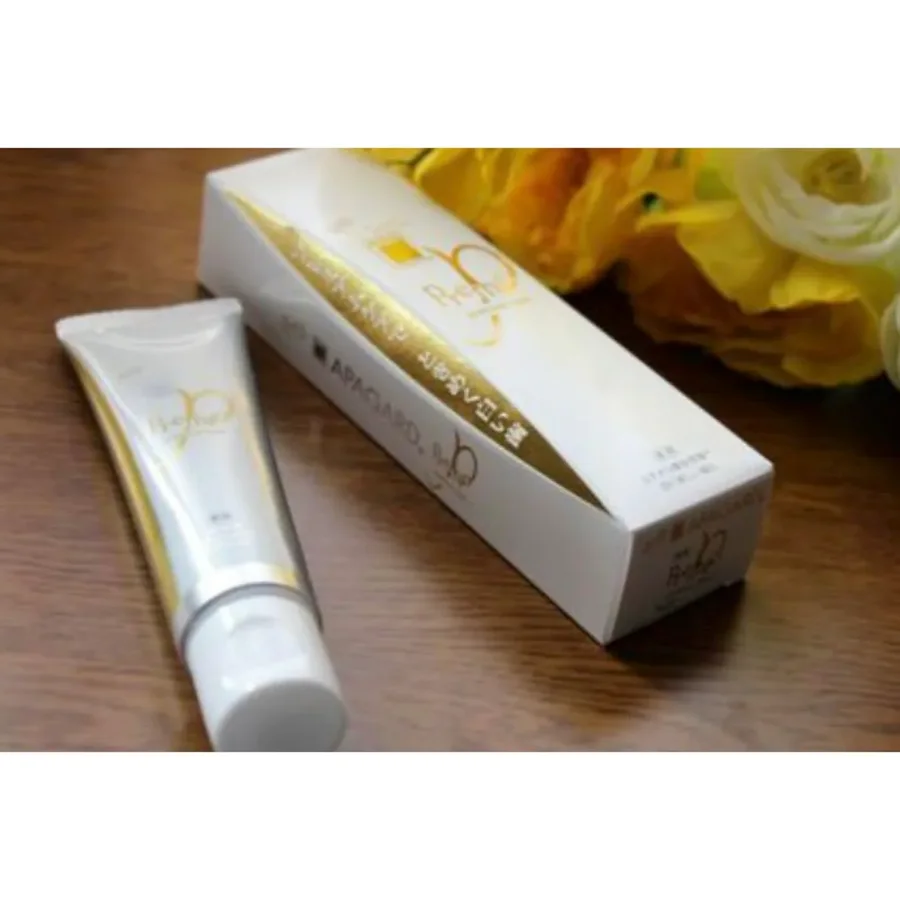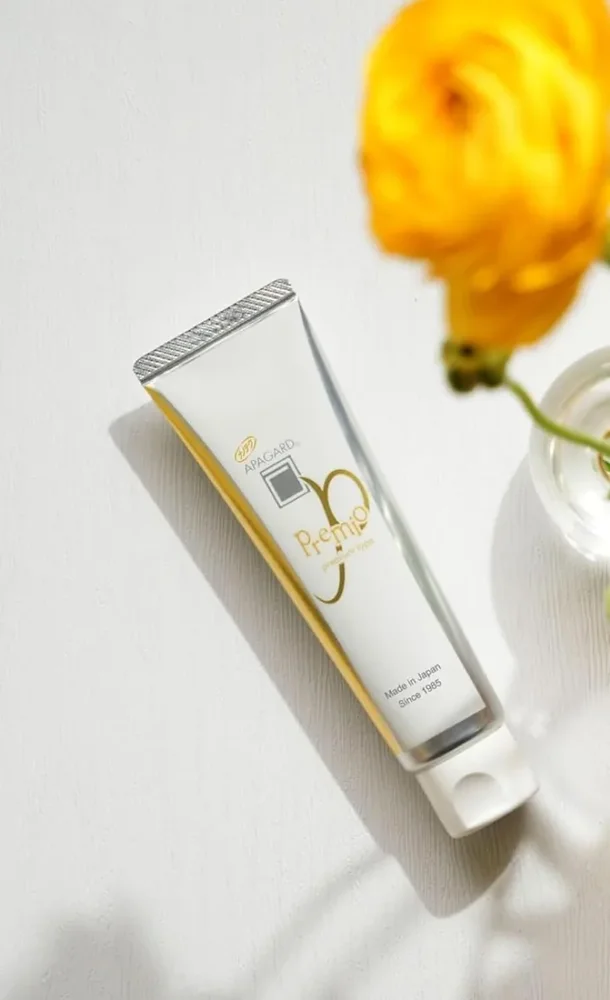
Premio and M-plus can work out to the same price per tube and still give you different amounts of toothpaste. In the US catalog the Premio tube weighs 105 grams, while M-plus weighs 125. They also differ in flavor and in how Sangi, their Japanese manufacturer, describes the amount of its hydroxyapatite ingredient. Choosing between them is easier once you know whether you are shopping for a particular formulation, a mild taste, or the most paste for your money.
Our choice for a first purchase within this range is a single M-plus tube if you already want a fluoride-free hydroxyapatite toothpaste and prefer a mild mint flavor. Premio is the better fit for someone looking specifically for Sangi's premium formula. We would skip the premium-priced Japanese imports unless you can identify a particular feature you want. If you need a fluoride toothpaste, look elsewhere in the aisle: the American Dental Association recommends brushing with fluoride toothpaste, and your dentist can help decide what is appropriate for you. ADA toothpaste guidance
Six tubes, four other ways to use the brand
The US catalog lists six distinct pastes. Their names recur on single tubes and bundles. Three tubes of Premio are still one type of paste. We examined the six distinct lines and four other products that Sangi identifies under the Apagard brand. The additional items are a children's gel, a dental lotion, a mouth rinse and a toothbrush. They answer very different shopping questions. Their inclusion in Sangi's wider assortment does not establish a US offer, and the individual product's market and pack should be checked before ordering an import.
| US catalog tube | Pack reviewed | Distinction on the shelf |
|---|---|---|
| M-plus | 125 g | Standard formula, mild mint |
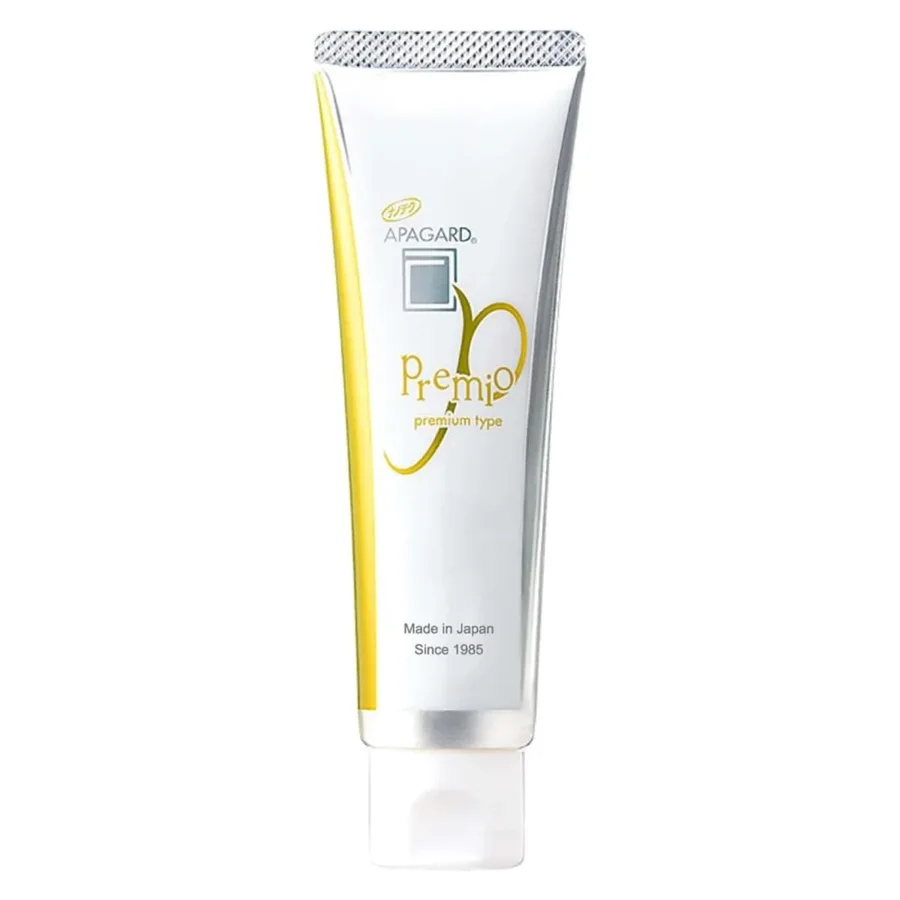
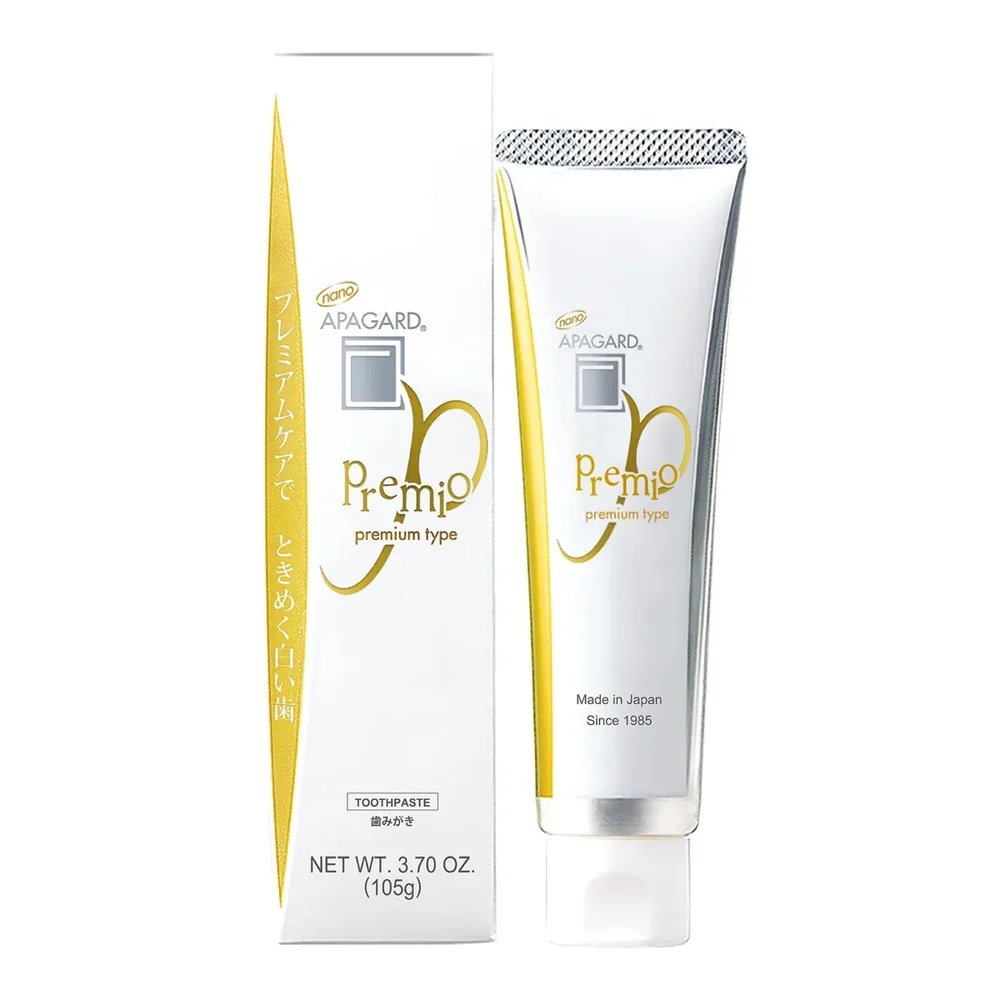
| Premio | 105 g | Premium formula, double mint on the reviewed US pack |
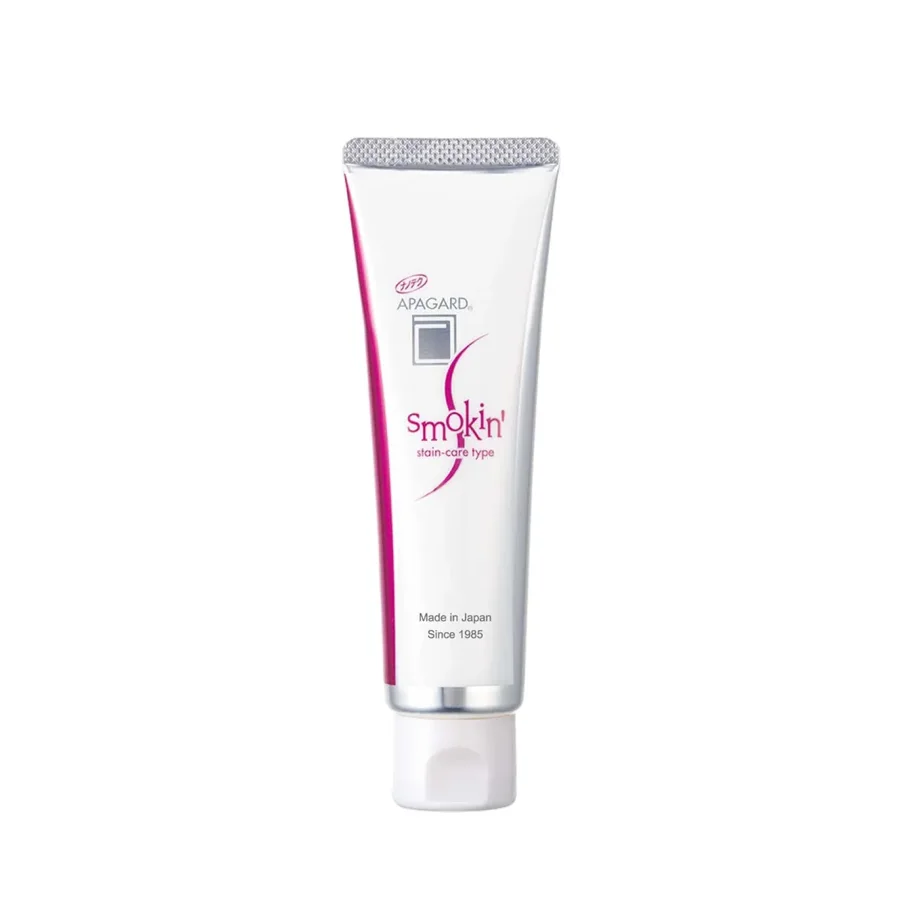
| Smokin' | 100 g | Stain-care positioning, mild mint |
| Serena | 105 g | Stain-care positioning, floral mint |
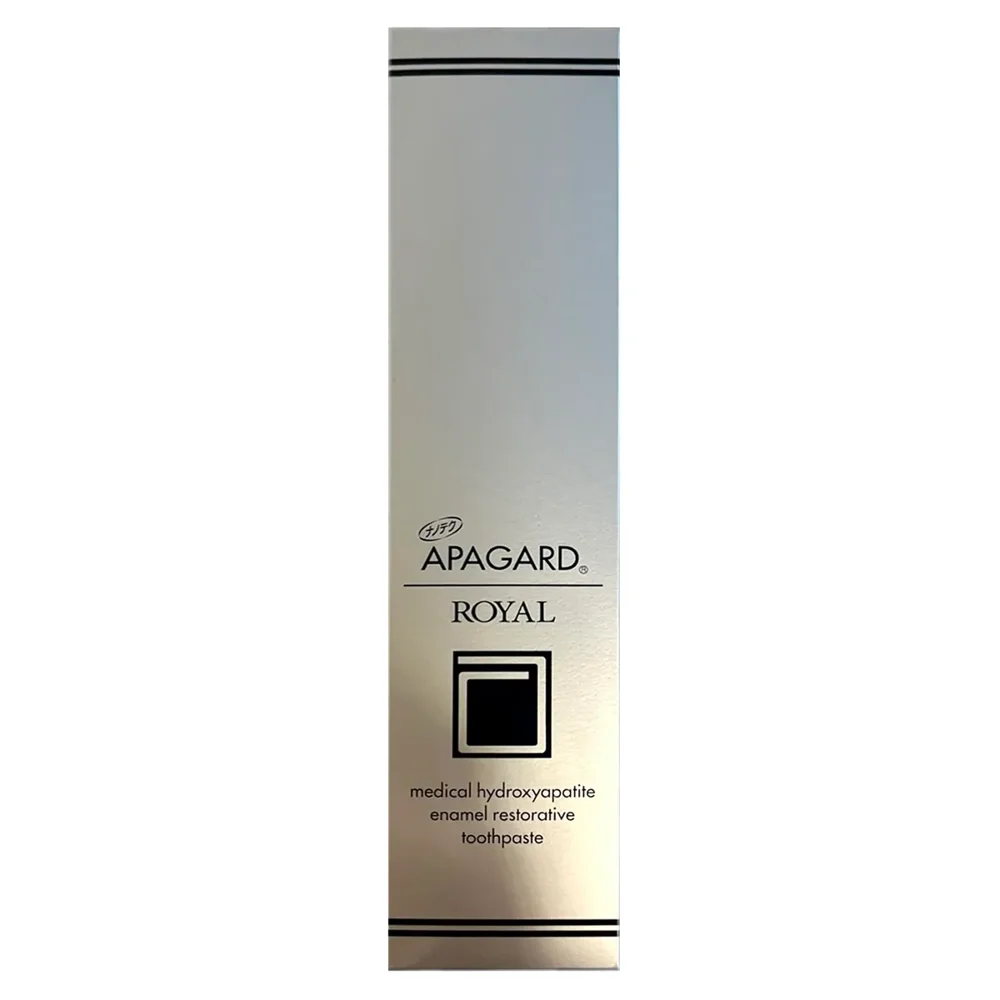
| Royal | 135 g | Top of Sangi's range, Japanese-market carton |
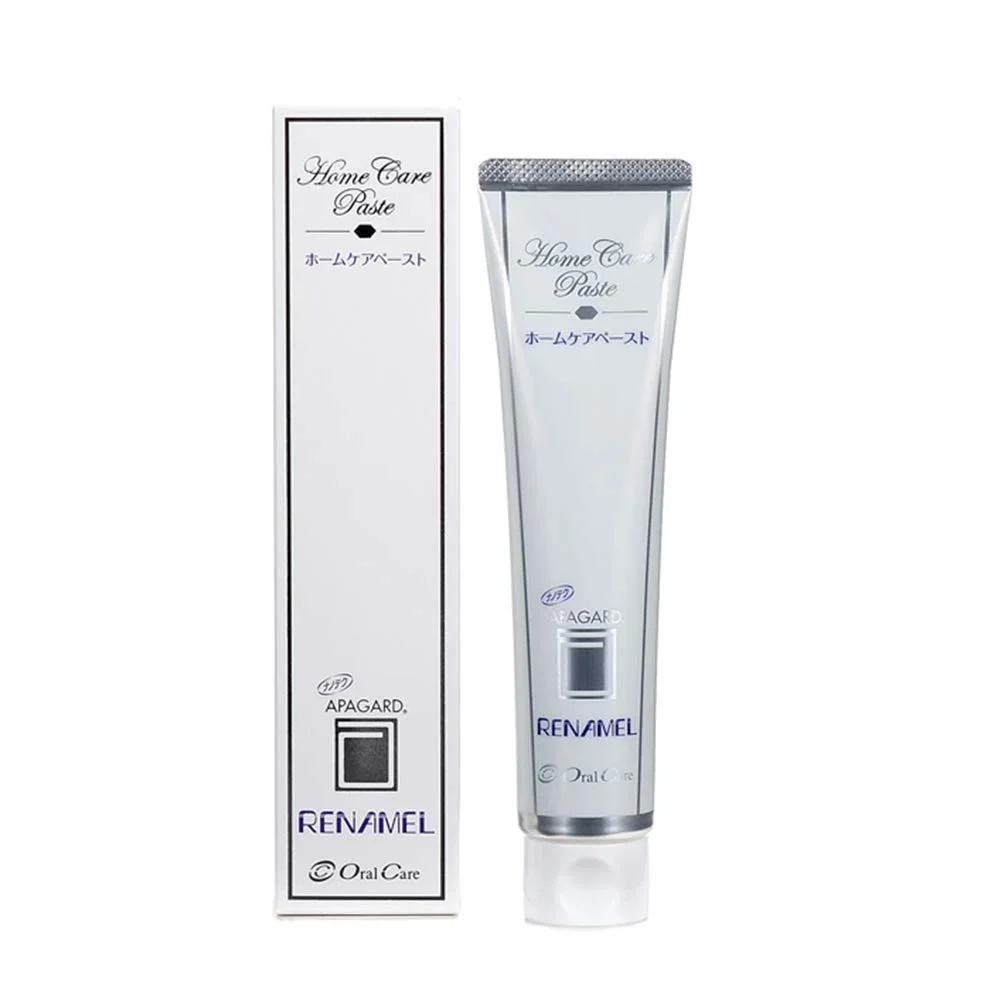
| Renamel | 120 g | Home Care Paste, a dental-channel product in Japan |
There is a good reason to take a second look at the size after you have chosen the name. Sangi's international catalog currently gives 130 grams for the larger M-plus and 105 grams for the larger Smokin'. The sampled US listings give 125 and 100 grams respectively. Packaging for a particular market or production run can differ from an international catalog. A discrepancy is a reason to verify the actual seller's photo and net weight. It is insufficient on its own to establish that a listing is counterfeit or that a buyer will receive an extra five grams. Sangi's product range · US Apagard catalog
M-plus and Premio make the cleanest comparison
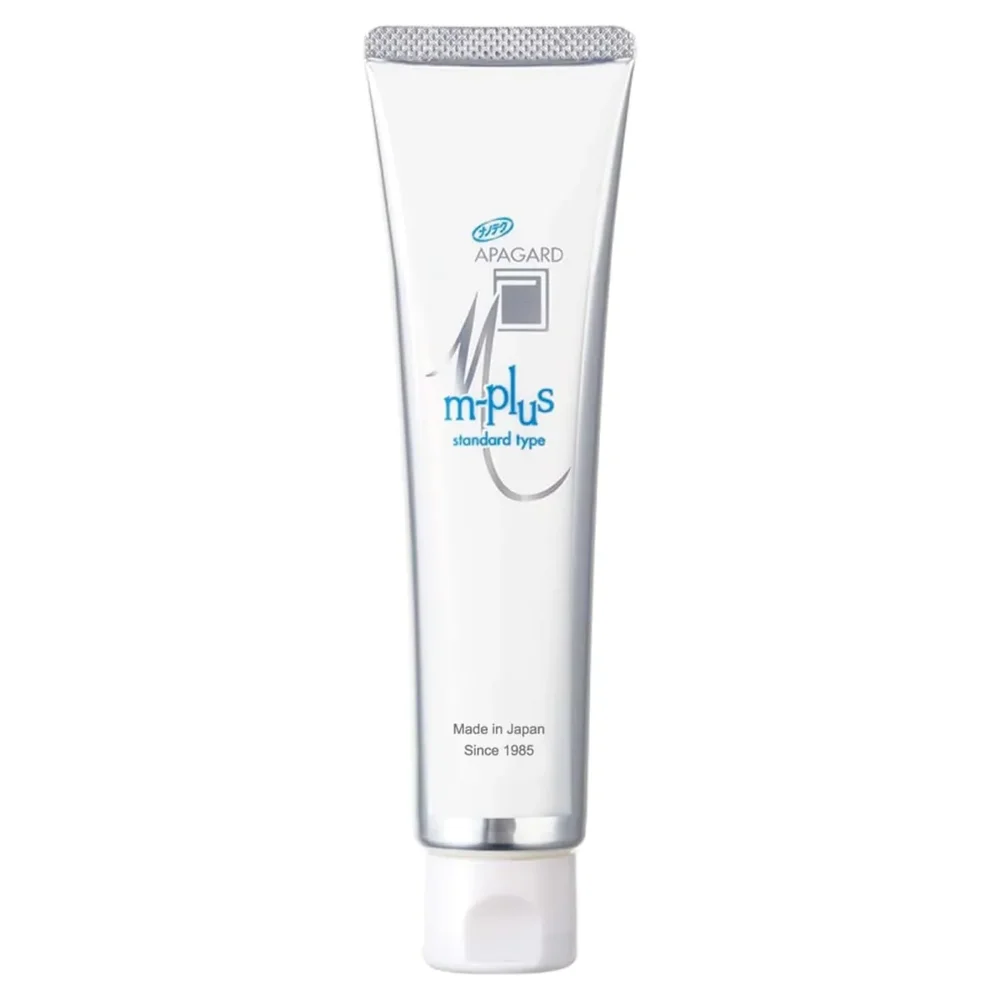
The simplest comparison is between two toothpaste tubes for everyday brushing. M-plus is the standard line. The reviewed pack identifies a mild mint flavor. Its ingredient list gives a number of clues about what is common across the Apagard range: glycerin holds moisture, silica and dicalcium phosphate contribute to physical cleaning, and sodium lauryl sulfate is a foaming ingredient. Hydroxyapatite is the calcium phosphate mineral at the center of Sangi's formulation. Customers who avoid a particular foaming agent should read the list on the actual tube before buying several at once.
Premio is the premium line. On Sangi's English product page the manufacturer describes a higher concentration of its nano hydroxyapatite than in M-plus and Smokin'. That is a comparison between the manufacturer's formulas. It does not give a percentage that could be placed alongside a different company's advertised percentage, or a predicted personal result for an individual buyer. A person who wants the higher concentration within this specific range has a concrete reason to pick Premio. A person who simply likes a mild mint toothpaste may be perfectly happy with the standard option. Sangi Premio specifications
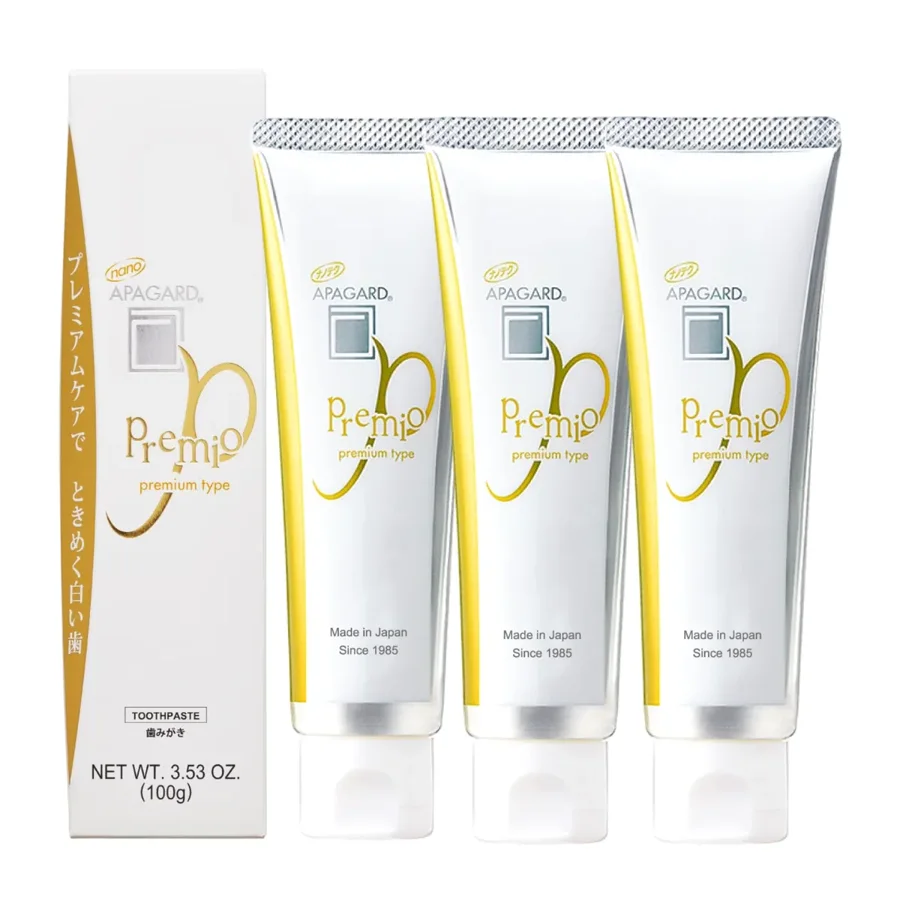
The names used for the mint also deserve attention. The sampled US Premio pack says double mint. Sangi's English product page describes a light mint flavor and the wider range contains a separately named Premio XtraMint. Buyers who care about intensity should compare the exact name and front photo against their last tube. Looking at the word “Premio” without its accompanying flavor and net weight leaves room for a perfectly authentic but unexpected purchase. We would not buy a three-pack solely to save money before trying the particular version.
Tubes can look almost identical once they have been taken out of their cartons. If two people share a bathroom but prefer different flavors, consult the product names and colored arcs before throwing the box away. A photograph of both sides of the carton can be helpful when it is time to reorder. Keeping the ingredient panel on record also gives you something more specific than the broad description “the Japanese one in a white tube” when asking a seller a question.
Smokin' and Serena both talk about stains
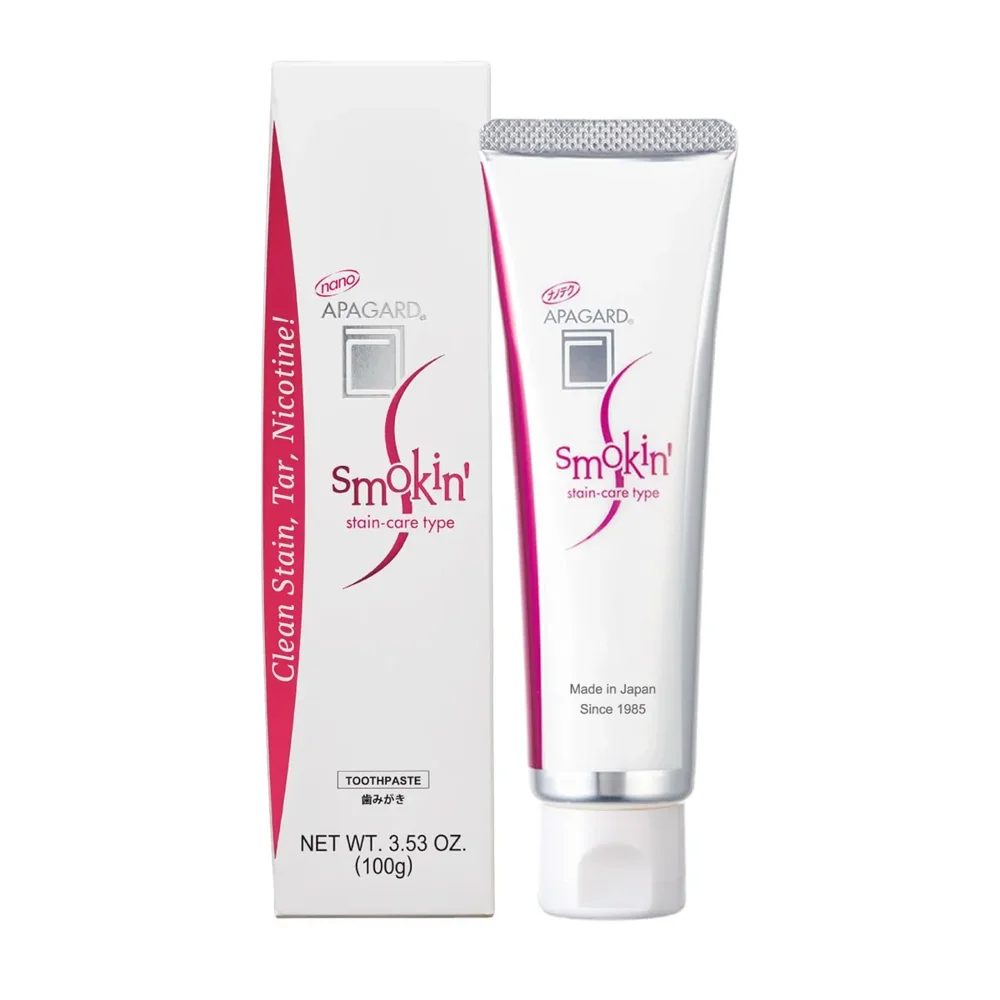
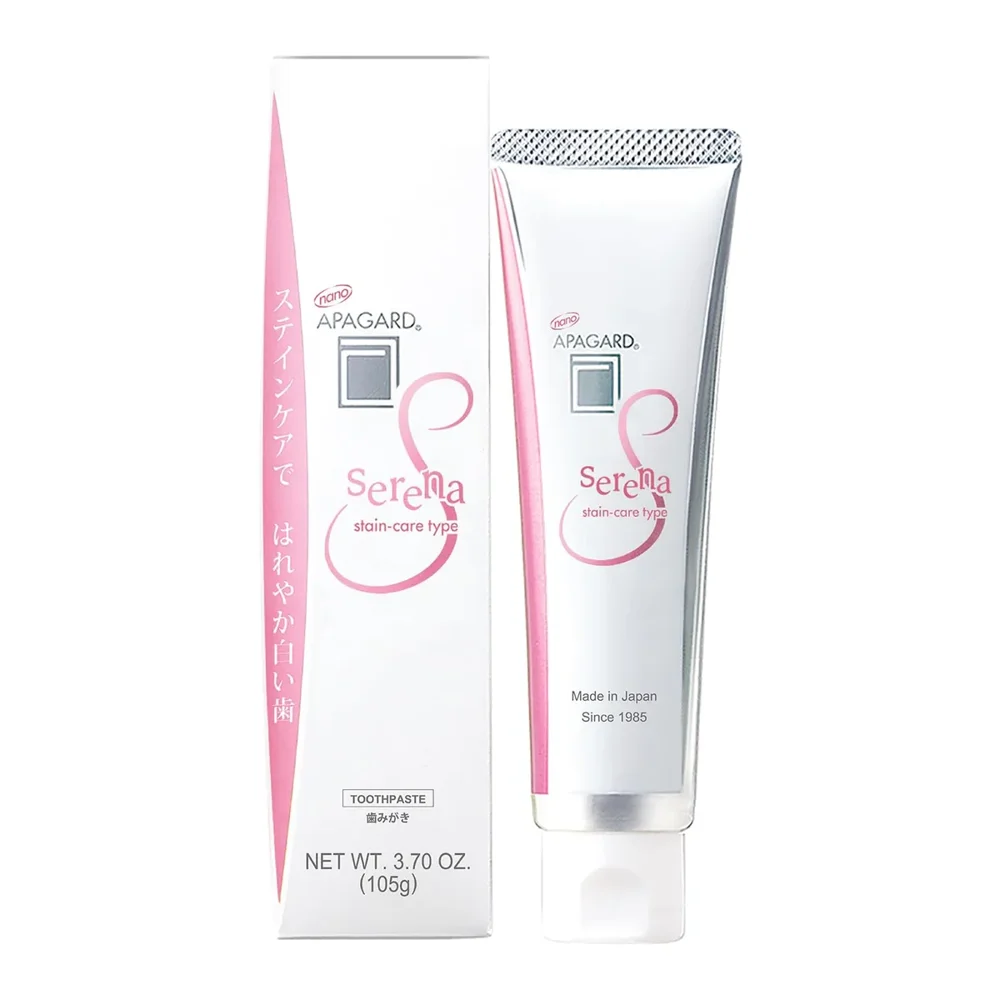
The paired stain-care products are easy to distinguish by flavor, even before looking at their ingredient panels. Smokin' is the mild-mint option in the source catalog. Sangi positions it for stains associated with tobacco. Serena is the floral-mint option, and Sangi refers to staining from coffee, tea and wine. Those descriptions give a buyer some idea of why both formulas exist. They do not show that either will deliver a particular shade change for a specific person, or that the two have been compared head-to-head in conditions that match the buyer's own routine.
A reader who dislikes floral flavors can probably cross Serena off the list immediately. Taste matters in an item you use repeatedly and hold in your mouth. A buyer who likes a floral mint may decide that is reason enough to try Serena, even if the stain-care positioning is a secondary consideration. It is reasonable to give the sensory choice more weight than a small difference in online star averages. Neither uses the same language as an in-office whitening procedure, and it would be a mistake to read dramatic before-and-after expectations into a carton promising surface-stain care.
There are differences on the back as well. The US comparisons list PVP in Smokin' and identify sodium metaphosphate and sodium citrate on Serena's panel. An ingredient name can help match a replacement to a tube you already own. It does not establish the abrasive value of the completed formulation. If that value matters because a dentist has advised you about a particular brushing concern, ask for information on the exact product. Guessing from the word “Smokin'” or the color of the carton would be especially unreliable.
Royal and Renamel come with a different shopping experience
Royal's 135 g tube is the largest single tube in this US comparison. Sangi places it at the top of the series by stated hydroxyapatite concentration and describes it as available only in Japan through its own distribution. An imported Royal listing and that manufacturer statement can both be true. A US shopper may encounter a Japanese-market product through another seller. Read the pack language and the seller's return terms, and consider whether a higher up-front price is justified by wanting this particular product.
Renamel has a distinct identity outside the six-tube shopping grid. Apagard's Japanese product page describes it as a dental-channel product, with low foaming and a mild peppermint flavor. It lists both a 120 g and a 50 g version. The US selection reviewed here is the 120 g Home Care Paste. The US table leaves the flavor unspecified; the explicit flavor description is from the manufacturer for its Japanese product. Matching the product name, net weight and market is more informative than assuming that every violet-labeled box on sale will be identical. Japanese Renamel product page
For either import, consider the value of being able to read the label you receive. A product name in English on the front does not ensure that the full directions and ingredients are in your preferred language on the back. A seller's translation may be useful but may refer to a different size or earlier package. Someone who can already identify their usual Japanese tube has one less uncertainty. A first-time buyer may find an export pack with usable instructions and a clear ingredient list easier to live with.
Sangi describes its Japanese-market Premio as “Light mint flavor” on the manufacturer’s product sheet. Its official Premio product film shows the Japanese range; check the flavor and weight on the tube you are actually buying rather than assuming an imported pack has the same wording.
Four products beyond the white toothpaste tubes
Sangi's 60 g Apakid's Gel is a non-foaming gel for first teeth. It is a genuinely different product: a gel intended for use by a parent, instead of an adult mint paste in a smaller container. Sangi also sells a low-foaming Apakid's paste for a later stage. If shopping for a child, discuss fluoride and a suitable product with the child's dentist. The availability of a branded children's gel is not evidence that an adult's fluoride-free choice should carry over to the child.
Deep-Care is described in Sangi's catalog as a lotion for use after brushing. That detail changes the whole purchase question. It does not replenish an empty toothpaste tube. It adds a separate step, so someone considering it should read the directions, the liquid size and the bottle or portion format. Sangi lists 250 ml and 5 ml presentations. A tiny liquid sample or portion shown in a search thumbnail is not a travel tube of Premio, even if both happen to bear the same familiar brand name.
Rin-Su is an oral rinse, listed in a 380 ml bottle and identified by Sangi as an overseas-market product. It, too, is distinct from Deep-Care. The product description and directions matter more than both being liquids used in the bathroom. Someone shopping for a replacement mouthwash can compare the rinse with other rinses, while someone replacing toothpaste should stay with toothpaste. Comparing the price of a 380 ml rinse with a 105 g tube by dividing both by a hundred would mix dimensions and produce a number with little practical meaning.
The Crystal Toothbrush is the one item among these four that does not dispense a formula at all. The transparent handle includes a crystal detail, and Sangi describes tapered bristles. A shopper choosing a manual brush ought to give the head, bristles and comfort of holding it at least as much attention as the decoration. Colors of that same brush do not create extra product types. We would consider it for someone who specifically likes the handle and head design and skip it for a buyer whose only reason to look is to match an Apagard tube. Sangi Apagard products and accessories
How Apagard compares with ordinary mint toothpaste
Two named Hello pastes illustrate how prominent front-label similarities can blur an important distinction. Hello Naturally Whitening Anticavity Fluoride Toothpaste contains fluoride and describes removing surface stains. Hello Superfresh Peppermint Fluoride Free Toothpaste also describes surface-stain removal but is sold without fluoride. Seeing mint, whitening and everyday cleaning on each pack does not establish that they are interchangeable if your reason for buying a particular toothpaste is cavity protection with fluoride. Hello Naturally Whitening Fluoride · Hello Superfresh Peppermint
| Product | Formulation or positioning | Who has a reason to compare it |
|---|---|---|
| Apagard M-plus | Standard hydroxyapatite toothpaste, fluoride-free | A buyer specifically seeking this Sangi formula in mild mint |
| Apagard Serena | Floral mint, stain-care toothpaste | A buyer comparing flavor and surface-stain positioning |
| Hello Naturally Whitening Anticavity | Fluoride toothpaste with mint flavor and surface-stain positioning | A buyer looking for a fluoride option |
| Hello Superfresh Peppermint Fluoride Free | Fluoride-free peppermint toothpaste with surface-stain positioning | A buyer comparing fluoride-free options by flavor and formulation |
The ADA states that a toothpaste must contain fluoride to be accepted for an anticaries claim under its Seal program. This is useful US context when reading material intended for another market. Sangi's international materials use terms relating to restorative whitening and anticaries action for its hydroxyapatite products. That language is the manufacturer's description. It does not establish that a particular import carries the US ADA Seal for cavity prevention. If you are replacing a toothpaste your dentist specifically recommended, settle that question before comparing taste or price. ADA on toothpaste and the Seal
Cost per tube and cost per gram answer different questions
Suppose you are comparing a three-pack of 105 g Premio with a two-pack of 125 g M-plus. The first order brings home 315 g and the second 250 g. Divide the complete price by three or two to get the cost of a tube. Divide by 315 or 250 and multiply by one hundred to get the cost per 100 g. The two calculations answer different questions. The first helps with a household budget if each person wants their own tube. The second is the clearer measure when comparing the amount of paste for the price.
The source provided a particularly neat illustration. Its displayed $42 for three Premio and $28 for two M-plus both worked out to $14 per tube when checked for this review. The Premio figure was about $13.33 per 100 g, while M-plus was $11.20 per 100 g. Those prices are a dated example from November 14, 2026. A change in the offer, shipping or selected tube size changes the result, and a lowest-cost gram still has little value if the flavor sits unused in the bathroom cupboard.
What the buyers actually commented on
William A. reviewed M-plus on June 2, 2026 and liked its taste and the feel after brushing, while explicitly noting that it was early to judge other changes. Another M-plus buyer, 3421Beechwood, wrote on May 27, 2026 about buying it over several years, the restrained mint taste and the cost. These comments offer complementary perspectives. One describes a first impression. The other tells you what a repeat buyer continued to notice. Neither supplies an independent measure of enamel change.
On March 25, 2026, DaKs reported a dirty, open carton seal on Serena and said the tube itself was sealed. The reviewer referred to a photograph. Their account documents a delivery concern on that purchase; checking the current seller and inspecting the package are more reasonable responses than drawing conclusions about every Serena tube. B C's May 16, 2026 Serena review described a pleasing after-brushing feel alongside use of another toothpaste. That detail makes it difficult to attribute an overall result to Serena alone.
Ruth Smith wrote on December 3, 2025 that the cost of Premio had led them to look at alternatives despite liking the product. We agree with the underlying shopping question. If the price has risen enough to make the purchase uncomfortable, comparing a single M-plus tube or an appropriately formulated toothpaste from another brand is more useful than automatically committing to a larger Premio bundle. These five accounts appear in the US source's buyer archive. Buyer accounts by product
Ratings and our verdict
The sourced single-tube listings displayed 4.5 from 468 ratings for Premio, 4.6 from 107 for M-plus, 4.3 from 57 for Smokin', 4.4 from 22 for Serena, 4.7 from 843 for Royal and 4.6 from 68 for Renamel. The Royal average is based on far more posted ratings than Serena's. On November 14, 2026, Amazon showed 1K+ purchases in the preceding month for Premio and for Royal, 200+ for Renamel, and 50+ for Smokin’. Each threshold belongs to its own listing. The numbers of individual tubes shipped and repeat purchasers remain unknown. Separate bundle listings can carry separate review averages, and aggregating them without knowing how a retailer groups variants could double-count feedback.
We recommend M-plus for someone who wants the standard Sangi formulation, mild mint and a reasonably sized single tube. Choose Premio if Sangi's higher stated mineral concentration is the feature you value. For a shopper drawn to stain-care products, the printed flavor is a good first way to decide between Smokin' and Serena. We would skip an expensive import or several tubes of an unfamiliar flavor until the exact ingredients, directions and delivered price satisfy you. Above all, we would keep a dentist's fluoride recommendation ahead of the temptation to decide from a row of attractive white cartons.