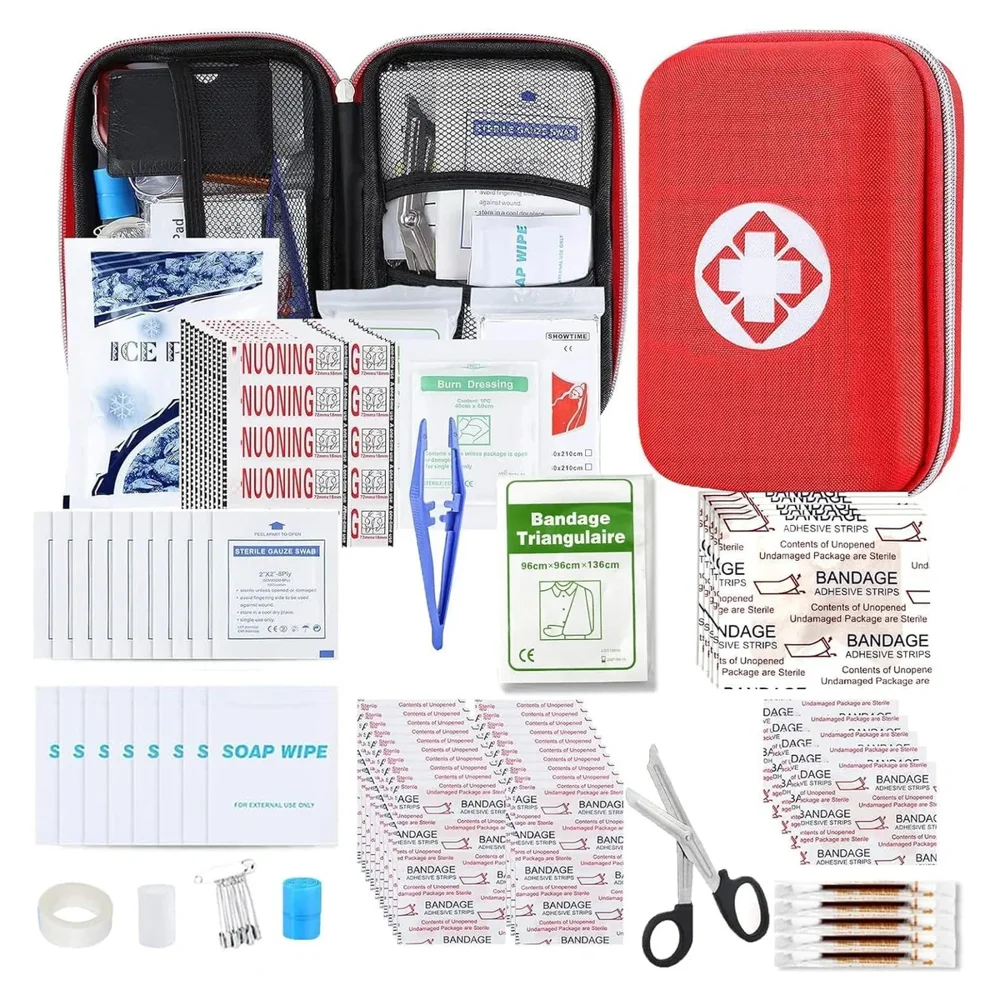
Open the AMORNING first aid kit and the most revealing number is 215. That is how many adhesive strips appear on its contents card when you add the two groups of one hundred to the ten rounds and five butterfly strips. The case is sold as a 276-piece kit. A buyer who regularly runs through bandages may welcome that balance. Someone shopping for the first complete kit for a family has a different decision to make. The card lists a single cold pack and blanket, and leaves out gloves, a thermometer and a first aid booklet.
We recommend this zippered case as a portable supply of basics for someone prepared to check and supplement it. We would choose a different starting point for a household that needs a more widely equipped family kit on day one. The other health product in AMORNING's catalog is a bottle of mini fish-oil softgels. We reviewed it separately below. The case and the bottle both illustrate how a large number on the front can draw the eye away from what an individual purchase contains.
A compact case with a particular bias
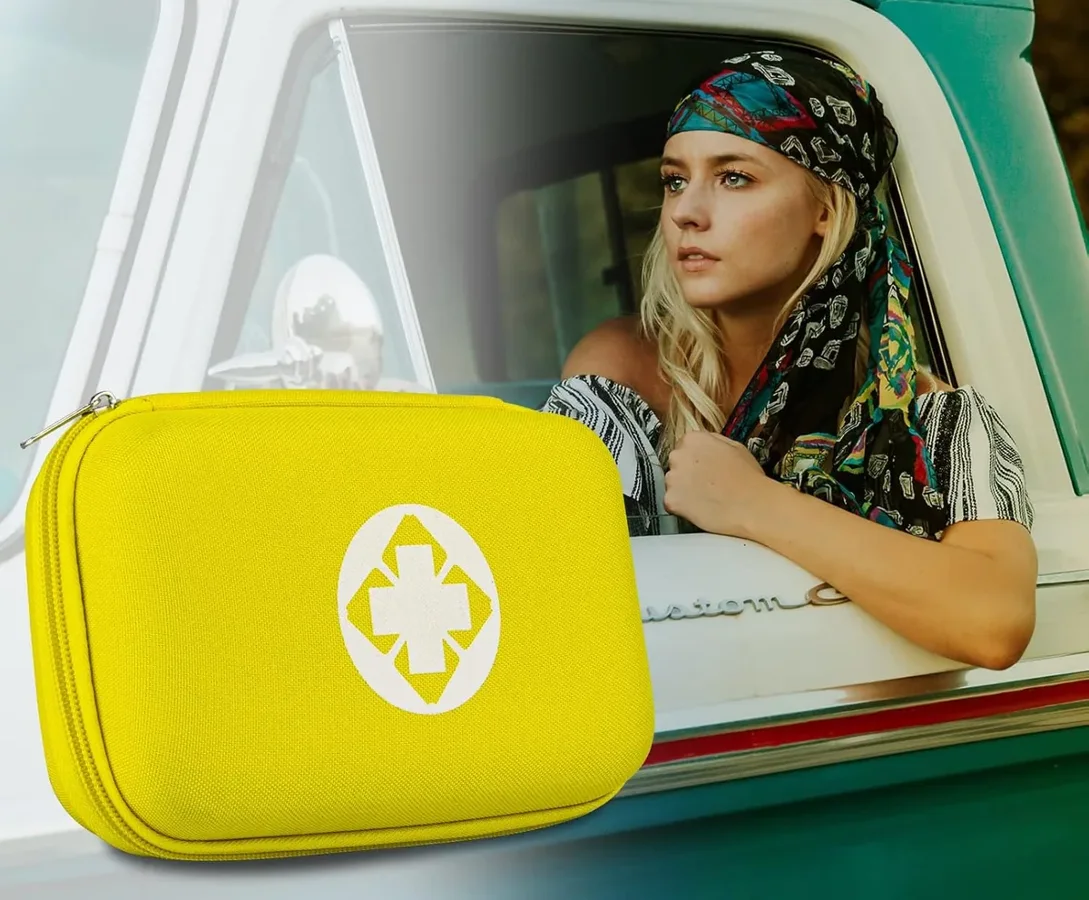
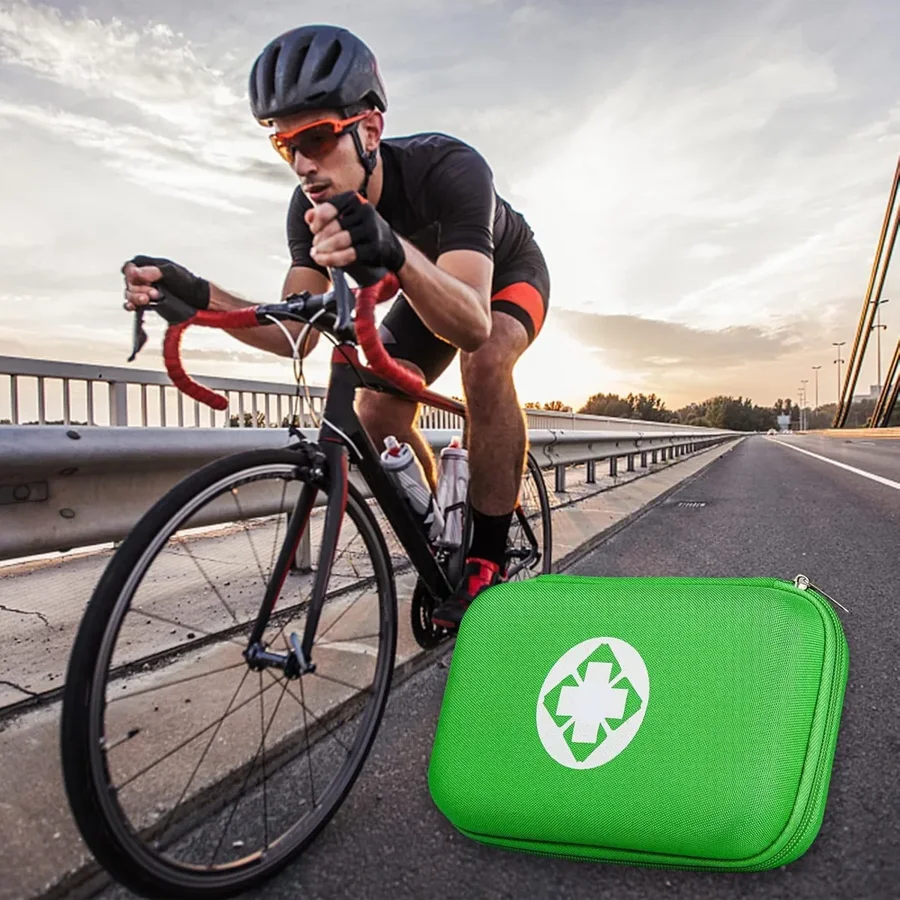
The rigid outer shell is made of EVA and closes with a zipper. Inside, elastic loops and a mesh pocket divide the contents between the two halves. The brand gives a weight of under a pound. It describes the case as water-resistant. Those details support an everyday use case: keeping individually packed supplies together inside a bag or in a place that is otherwise full of loose objects. They do not give an immersion rating or establish how the case would perform on a wet overnight trip.
The most helpful product photograph is the one with the contents arranged outside an open case. You can see how much of the inventory consists of flat packets, compared with the few objects that hold a fixed shape. Elastic is useful for keeping a pair of scissors in an expected place. Mesh leaves some of the packets visible without allowing them to slip out the moment a zipper opens. Neither feature tells you whether the person looking for a particular size of bandage will recognize it without first handling the packet.
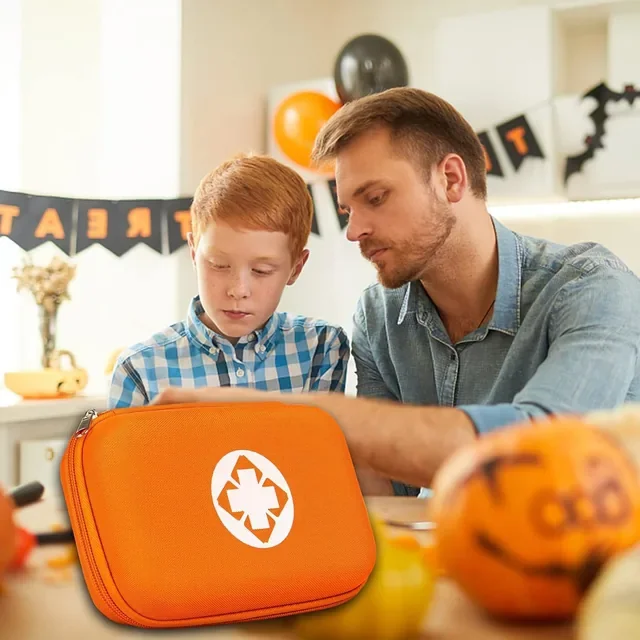
This matters when the kit is bought for someone else. A brightly colored case in the right drawer is little use if nobody knows it has arrived. Once the kit is in hand, invite the people likely to fetch it to open it while nothing is urgent. Let them see where the wipes are and which compartment holds the bandages. There is no need to open individually sealed supplies to learn the layout. This simple look inside will also tell you whether adding anything would make the case hard to close.
How much of the advertised count would you actually use?
Nearly four fifths of the headline 276 pieces are the four groups of adhesive strips. That proportion helps put the other numbers into perspective. A family going through strips at the playground could find the emphasis entirely sensible. A buyer comparing kits on the assumption that 276 means dozens of different tools will be disappointed. The set lists eighteen kinds of supplies. The pieces and the kinds answer two different shopping questions.
| On the published contents card | Listed quantity | What the number tells you |
|---|---|---|
| Rectangular adhesive strips, 40 by 10 mm | 100 | A large share of the kit is a single small size |
| Assorted adhesive strips | 100 | Several shapes or sizes can be present within a single count |
| Round and butterfly strips | 10 round and 5 butterfly | These make up a relatively small part of the adhesive assortment |
| Soap wipes, wipe pads and gauze swabs | 8, 10 and 10 | Supplies intended for different tasks have separate entries |
| Cotton swabs | 5 | The handful of swabs is easy to count at a glance |
| Triangular bandage, roller bandage, burn dressing and adhesive tape | One of each | Each line can disappear from the kit after a single use |
| Instant ice pack and emergency blanket | One of each | The kit has no listed spare for either item |
| Scissors and tweezers | One of each | Small plastic tools are part of the offer |
The printed line for the standard rectangular strip is worth pausing over. Forty by ten millimeters is about 1.6 by 0.4 inches. Mark that rectangle on a scrap of paper if the dimensions on the page are hard to visualize. It takes up much less space than a shopper might picture when reading “assorted bandages.” The published inventory puts another hundred strips in the assorted group, but the first hundred remain the specified small size. Do you want that many? A familiar size you use frequently is worth more than a high count of a size you usually leave behind.
The source also gives small variations in the total piece claims for different colors. Most are labeled 276, the pink case 277 and the black case 279. The catalog says the cases share a contents card. We could not reconcile every headline piece with an individually identified object from that card, and we would give the small numerical differences no weight in choosing a color. Check the actual contents list when yours arrives. If a particular item matters, its name, packaging and condition are a better basis for a decision than the difference between 276 and 279.
A second listing for the black case
AMORNING also sells a Small Travel First Aid Kit. Shoppers can easily read that title as a second design, smaller than the one sold in nine colors. The catalog identifies it as a black case with the same contents card. We have treated both listings as one family. Compare the photos, the printed case dimensions if the particular offer provides them, and the delivered price. A separate product page or a different star average does not establish that there is a different set of tools inside.
Color can still earn its keep. When two cars share a driveway, a recognizable case may be easier to return to the right car after a weekend trip. A red case might be conspicuous in one bag and hard to spot among the red equipment in another. If someone other than the buyer will be doing the searching, involve that person in the choice. A simple written location and a consistent place for the kit are useful even in a house where everyone can tell the colors apart.
A first aid kit should also be small enough for its intended location. The source describes a glove compartment, kitchen drawer or backpack. Those are examples, not standardized sizes. Think about the occupied space, including any documents kept in a vehicle compartment and items packed around a kit. There needs to be room to reach it and remove it. A rigid case protects flat packets from some everyday crushing, but it will give less than a soft bag when a drawer is nearly full.
How it compares with a family kit
First Aid Only's American Red Cross Deluxe All Purpose First Aid Kit offers a fair comparison because both products are zippered kits sold for home or travel and both advertise several hundred pieces. The First Aid Only kit has 299 pieces. Its more useful distinction is what appears on its contents list. The manufacturer names a thermometer, nitrile exam gloves, a Red Cross guide and several individually packed medicines. AMORNING identifies those as omissions from its kit. First Aid Only Deluxe kit
| Feature | AMORNING 276-Piece family | First Aid Only American Red Cross Deluxe, 299 pieces |
|---|---|---|
| Container | Rigid EVA zip case, loops and mesh | Soft nylon zip case, clear vinyl pockets |
| Listed weight | Under 1 lb | 1.3 lb |
| Cold pack and blanket | Both listed | Both listed |
| Thermometer | Not supplied | Supplied |
| Exam gloves and guide | Neither on the contents card | Nitrile gloves and Red Cross guide listed |
| Medicines | None listed | Contents list includes individually packed medicines |
For one household the absence of medicines may be a point in the smaller kit's favor. An adult who manages the household's medicines separately may prefer a case of dressings and supplies that is easy to inspect. Another household may want a broader inventory in one place. The bigger kit also has different storage demands and contains items that need their own expiry checks. Decide whether the desired purchase is a tidy box of often-used basics or a more extensive set to keep together.
The Red Cross publishes a separate list for a family of four. It includes larger absorbent compress dressings and assorted adhesive bandages, among other supplies. That is a valuable cross-check when one box has hundreds of little strips but no gloves. Its advice on maintaining the contents includes the instruction “Check the kit regularly.” The habit matters even with a large kit because one missing single-use item can change what the kit has available. American Red Cross first aid kit checklist
Restocking is part of the price
Try picturing what happens after the first trip. A packet of adhesive strips comes out of one side, the one cold pack comes out of the other, and the kit is put back on a shelf. The case looks much the same when closed. The next person who needs a cold pack will find an empty loop. With only one listed, a replacement matters much sooner than a new hundred-pack of strips. A plain inventory note on paper can be more useful than an app for an object several people may borrow.
Write down the items that have only one unit and check those first. Keep a separate list of anything you add yourself. If you move a thermometer into the zip case from a bathroom cabinet, make that change visible to the other people who use the cabinet. If an addition is too bulky for the case, a nearby labeled container may be a better place than forcing the zipper closed. Check dates and seals when restocking, and follow the storage information on each individual package.
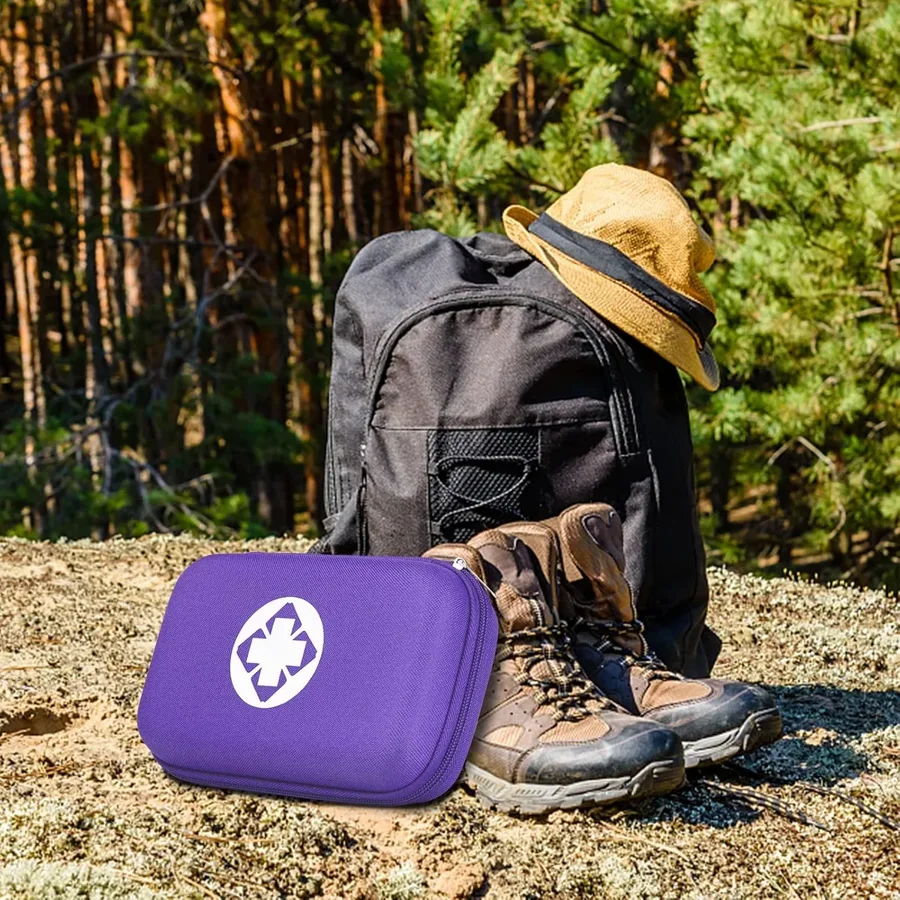
The seller describes this kit for travel and outdoor activities, but a photo of a campsite cannot establish that the set suits a particular outing. A local sports bag seldom goes far from other adults and supplies. An extended trip can involve a different environment, access to help and individual needs. The same portable zip case can play a part in both without being sufficient on its own. For a specific activity, compare the actual contents with the advice of a qualified first aid provider and the arrangements of the group.
A different label on the fish-oil bottle
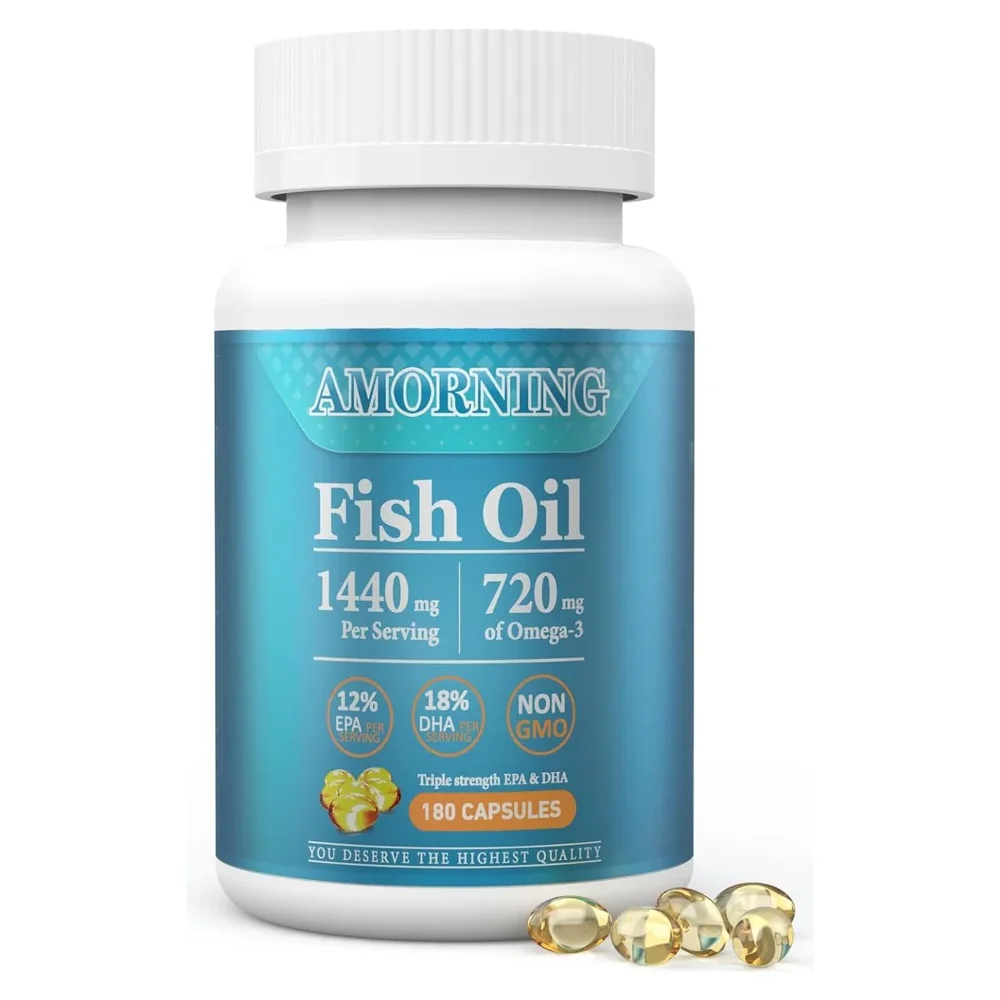
Turn to AMORNING's fish oil and the number on the front changes from pieces to softgels. Each bottle has 180, with two softgels per labeled serving. That makes 90 servings. The unit is important when comparing the bottle against a supplement that gives its amounts for one much larger softgel. Taking a two-softgel amount from this bottle and placing it next to a single-softgel amount from another without checking both serving sizes can make an ordinary difference in presentation look like a difference in formulation.
The label reproduced in the catalog lists 1,440 mg of fish oil per serving and 720 mg of total omega-3 fatty acids. The latter is part of the former. Adding the two numbers would count some of the same material twice. EPA and DHA are identified as percentages on the reproduced panel. It is sensible to ask for explicit milligram figures if you need an exact comparison of these two fatty acids. The published extract does not identify the denominator clearly enough for an arithmetic conversion we would recommend relying on.
| Bottle detail | Published figure | Practical implication |
|---|---|---|
| Softgels per bottle | 180 | The item count on the front |
| Softgels per serving | 2 | Divide the bottle count by two when comparing servings |
| Servings per bottle | 90 | Use this to compare price per labeled serving |
| Fish oil per serving | 1,440 mg | The whole oil quantity, which includes fatty acids |
| Total omega-3 per serving | 720 mg | The portion identified as omega-3s |
| Length of each softgel | 0.59 in | An actual size to compare against a familiar capsule |
To picture the size, 0.59 inch is about fifteen millimeters. A buyer who struggles with long capsules can mark that length on paper or compare it with an existing softgel they tolerate. Length says nothing definite about the width or about how the capsule will feel to a particular person. This is where comments from buyers are useful as a complement to the measurement. They explain why the format appealed to them without turning a subjective swallowing experience into a universal prediction.
The bottle deserves a different storage decision from the first aid kit. AMORNING specifies a closed bottle in a range from 64.4 to 78.8 degrees Fahrenheit. A vehicle can move well outside that range. Buying a bottle of supplements from a brand that also sells a car kit is no reason to keep the two purchases together. A cupboard that meets the label's directions and is away from heat is a more sensible place to consider. AMORNING supplement label
A decision to take any supplement is separate from a decision to compare two bottles. NIH describes several sources of omega-3s, including fish oil and algae-derived supplements, and notes that supplements can interact with medicines. If a healthcare professional has discussed EPA or DHA with you, take the Supplement Facts panel to that conversation instead of relying on a large fish-oil number on the front. This review can evaluate the clarity of the label and the size of the softgel. It cannot decide whether taking it is appropriate for you. NIH consumer guide to omega-3 fatty acids
What five buyers noticed
Isnel Jorge Luis rated the first aid kit five stars on September 9, 2026. The verified-purchase account describes appreciating both the arrangement of supplies and the small footprint for car and camping trips. E, reviewing the red case on September 25, also gave five stars. E singled out the labels and the ease of moving the case between a car and a sports event. Together these reports point to a concrete strength beyond the piece count: several people can make sense of the case without having packed it themselves.
A Canadian buyer writing under the name Canadian gave the red kit three stars on September 29, 2026. The compact size worked in the vehicle, but the reviewer replaced the tweezers. That observation matters more if the tweezers are one of the main reasons you are considering a complete set. A buyer who already has a preferred pair may instead see it as a small change to make when checking the case. These three accounts appear together with their dates and the selected kit on the source's buyer pages. AMORNING kit reviews
The other two reports concern the bottle. On July 11, 2026, Z gave the Mini Softgels five stars, mentioning the small size and reporting no unpleasant aftertaste. On September 17, 2026, Joanne W also gave five stars and described finding these softgels easier to swallow. Both appear as verified purchases in the catalog's review record. Neither report measures the purity of the oil, identifies the amount of EPA or DHA in milligrams, or establishes a health outcome. AMORNING fish-oil reviews
Individual review references: Isnel Jorge Luis, E, Canadian, Z, Joanne W.
The original source’s buyer archive collects the dated accounts for both products. It identifies which color or product the writer received; a review of the red case says little about whether someone would find the softgels easy to take.
Ratings, sales and our verdict
On November 14, 2026 the source catalog displayed 4.7 out of five from 3,320 ratings for the main kit, 4.6 from 65 for the separately listed travel kit and 4.6 from 944 for the fish oil. Because the black case appears in the same kit family, pooling those totals would create an impression of independence that the listings cannot support. Amazon’s red 276-piece kit listing displayed 1K+ purchases in the preceding month when checked on November 14, 2026. The threshold applies to the kit listing. Exact sales of the kit and mini softgels remain undisclosed.
We recommend the AMORNING case for a buyer who wants an organized portable collection rich in small bandages and is willing to make a few deliberate additions. We would pass on it as a ready-made family kit if gloves, a thermometer and a first aid guide need to be in the box from the start. For the fish oil, the clear serving count and small measured length make the bottle worth considering for someone who already wants this type of supplement. A buyer who needs a precise EPA-versus-DHA comparison should look for a label with both amounts explicitly stated in milligrams.